How to See the Great Migration River Crossing in the Serengeti
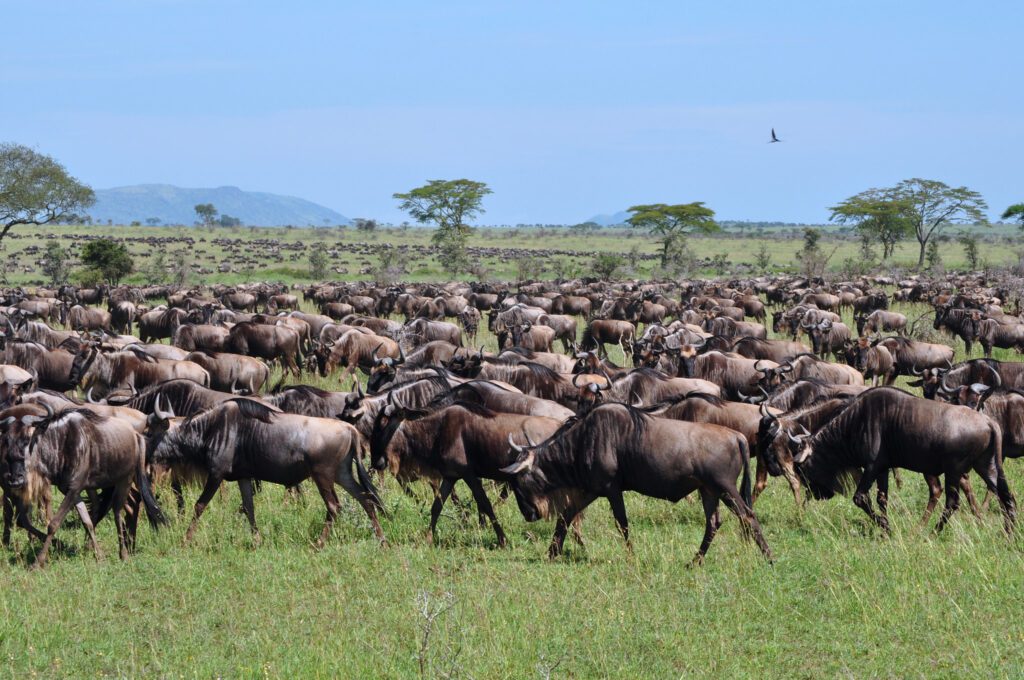
The Great Migration river crossing is one of Africa’s most spectacular wildlife experiences. Each year, huge herds of wildebeest and zebra move through the Serengeti ecosystem in search of fresh grazing and water. When the herds reach the Mara River in northern Serengeti, they face one of the migration’s most dramatic challenges: crossing a deep, unpredictable river where crocodiles wait below.
For travelers planning a Serengeti safari, seeing a Mara River crossing can be an unforgettable experience. However, river crossings are completely controlled by the animals and cannot be guaranteed. The key is choosing the right area, traveling at the right time, allowing enough days for wildlife viewing, and working with an experienced safari guide.
Where Does the Great Migration River Crossing Happen?
The famous Mara River crossings take place in the northern Serengeti, close to the Tanzania-Kenya border. The Mara River flows through the wider Serengeti-Mara ecosystem and becomes an important obstacle for migrating wildebeest and zebra.
One of the best-known areas for viewing the crossings is around Kogatende in northern Serengeti.
Tanzania National Parks Authority (TANAPA) has designated specific river-crossing viewing areas along the Mara River. Its official guidelines identify multiple crossing points and establish designated areas where safari vehicles should remain while guests watch the migration.
This means visitors should not simply drive wherever they want along the river. Responsible viewing helps protect the animals and the fragile river environment.
When Is the Best Time to See the Mara River Crossing?
The most popular period for seeing the Great Migration river crossing is generally during the dry-season migration through northern Serengeti, particularly from around July through October.
However, there is no exact date when the crossing will happen.
The migration responds to rainfall, grass availability, water levels and other natural conditions. A herd may gather beside the river for hours or even days before deciding to cross. It may also suddenly change direction.
This uncertainty is part of what makes the experience so exciting.
Tanzania’s tourism information identifies June through October as a strong period for wildlife viewing, with June and July particularly important for migration viewing.
August and September
For travelers specifically interested in the Mara River crossing, August and September are often attractive months to consider because the migration is typically associated with northern Serengeti during this period.
But remember: a specific crossing cannot be guaranteed even during peak migration season.
The best strategy is to spend several days in the northern Serengeti rather than visiting for just one night.
How Does a Wildebeest River Crossing Happen?
A river crossing can begin when thousands of wildebeest gather near the riverbank.
At first, the animals may appear nervous and uncertain. They can spend a long time moving back and forth along the bank before one group finally commits to the crossing.
Then everything can change in seconds.
Once the first animals enter the river, hundreds or thousands may follow. Wildebeest scramble down steep banks, plunge into the water and swim toward the opposite side.
The scene can be chaotic, dusty and dramatic.
Zebra may also be part of the crossing, while crocodiles can be seen waiting in the river.
After the animals reach the opposite bank, the herd continues its journey across the Serengeti.
Where Should You Stay to See the River Crossing?
If your main goal is to see the Mara River crossing, staying in northern Serengeti is the most practical approach.
Kogatende is an important base for migration safaris because of its proximity to the Mara River and the surrounding wildlife areas.
Accommodation options range from permanent lodges to seasonal and mobile tented camps. A mobile camp can be particularly useful for travelers who want their safari accommodation positioned close to the migration route.
When choosing accommodation, consider:
-
Distance from the Mara River
-
Access to designated viewing areas
-
Safari vehicle availability
-
Experience of the guiding team
-
Number of nights included
-
Whether the camp follows the seasonal migration
-
Road and air access
The goal is not simply to stay in the most luxurious property. Location and guide quality can make a major difference to your chances of finding the herds.
How Do You Get to the Northern Serengeti?
There are two main ways to reach northern Serengeti: by road or by safari flight.
By road
A road safari allows you to experience more of the Serengeti along the way. It can be a good choice if you want a longer safari that includes central or southern Serengeti before continuing north.
The disadvantage is that driving between regions takes time.
By air
Flying into the northern Serengeti can save considerable travel time.
Kogatende Airstrip is an important access point for safari travelers visiting the northern Serengeti and Mara River area. TANAPA’s official Mara River crossing map identifies Kogatende Airstrip and Kogatende Bridge in the northern Serengeti crossing area.
A fly-in safari can therefore be an excellent option for travelers with limited time who want to concentrate on the Great Migration.
How Many Days Do You Need for the Great Migration River Crossing?
If seeing a river crossing is your primary objective, plan for at least three nights in northern Serengeti, with four or more nights providing additional flexibility.
Why?
Because you cannot schedule wildlife according to a clock.
The wildebeest may be near the river when you arrive, but they may not cross that day. Alternatively, a crossing could happen shortly after you leave.
A longer stay gives your safari guide more opportunities to monitor the herds and position you appropriately.
For travelers with enough time, combining northern Serengeti with other parts of the park can create a more complete migration safari.
What Makes the Mara River Crossing So Special?
The river crossing is not simply about watching animals swim.
It is the combination of anticipation, uncertainty and scale that makes the experience extraordinary.
You may watch thousands of animals gather along the riverbank while waiting for the first wildebeest to make a decision.
The atmosphere can suddenly change from quiet anticipation to intense movement.
Dust rises from the riverbank. Wildebeest enter the water. Zebra follow. Crocodiles wait below. Other animals watch from the surrounding landscape.
And then, sometimes just minutes later, it is over.
That unpredictability is one of the defining characteristics of the Great Migration.
Can You Guarantee Seeing a River Crossing?
No.
A reputable safari operator should never guarantee that you will see a river crossing.
The migration is a natural event, not a scheduled performance.
Even during the best months, the animals decide when and where to cross. Weather and rainfall can also affect their movements.
Instead of asking, “Can you guarantee a crossing?” ask your safari operator:
-
How many nights will we spend in northern Serengeti?
-
How experienced are the guides with migration tracking?
-
How close is our accommodation to the Mara River?
-
Which designated crossing areas can we access?
-
How do you monitor the location of the herds?
-
What happens if the herds move away from the river?
These questions will help you choose a safari designed around the migration rather than simply marketed around it.
Responsible Mara River Crossing Viewing
Seeing the Great Migration comes with a responsibility to protect the animals and their environment.
TANAPA has introduced specific guidelines for Mara River migration crossings because of concerns about unethical tourism practices around crossing points.
According to the guidelines, safari vehicles must use designated crossing areas and remain stationary in designated viewing areas when animals are crossing. Visitors should not approach the animals during a crossing.
Other important principles include:
-
Follow your guide and park regulations.
-
Do not drive toward or chase migrating animals.
-
Stay inside the designated viewing area.
-
Keep noise to a minimum.
-
Never throw objects or food toward wildlife.
-
Do not picnic on the riverbanks where prohibited.
-
Give animals space to move naturally.
-
Respect other safari vehicles and visitors.
Responsible tourism ensures that future generations can experience the same remarkable migration.
What Should You Bring?
A few practical items can make your river-crossing safari more comfortable.
Bring:
-
Binoculars
-
Camera with a telephoto lens
-
Extra batteries or a power bank
-
Hat and sunglasses
-
Sunscreen
-
Light, neutral-colored clothing
-
A warm layer for early mornings
-
Dust protection for cameras and electronics
-
Reusable water bottle
A telephoto lens is especially useful because responsible safari viewing means maintaining an appropriate distance from wildlife.
Tips for Photographing the Great Migration River Crossing
River crossings can be challenging to photograph because the action can happen very quickly.
Before the crossing begins, set your camera up and be ready.
Use a fast shutter speed to freeze running animals and splashing water. A telephoto lens allows you to capture close-up images without asking your vehicle to move closer to the animals.
Also take time to photograph the wider scene.
The enormous scale of the herd, the river, the landscape and the dust can tell a better story than a single close-up photograph.
Most importantly, do not spend the entire crossing looking through your camera.
Put the camera down occasionally and experience the event itself.
Great Migration River Crossing vs. Grumeti River Crossing
The Mara River is not the only river associated with the Great Migration.
Earlier in the migration cycle, herds may encounter the Grumeti River in the western Serengeti.
The Mara and Grumeti crossings are different wildlife experiences and occur in different areas and periods of the migration.
If your primary goal is the classic northern river-crossing experience, plan your safari around northern Serengeti and the Mara River rather than assuming that any migration safari will automatically include a Mara crossing.
Is a Mara River Crossing Safari Worth It?
For wildlife enthusiasts, photographers and first-time safari travelers, it can be one of the most memorable experiences in Tanzania.
However, it is important to understand what you are booking.
You are not booking a guaranteed show.
You are entering a wild ecosystem and watching one of the planet’s great natural movements unfold on its own schedule.
That uncertainty is precisely what makes the experience authentic.
Frequently Asked Questions
What month is best for the Great Migration river crossing?
July through October is generally the main period travelers consider for the Mara River crossings in northern Serengeti. August and September are particularly popular, but exact crossing dates vary from year to year.
Where is the best place to see the Mara River crossing?
Northern Serengeti, particularly the Kogatende area, is one of the key areas for experiencing the Mara River crossings.
Can I see the crossing from a lodge?
Some camps and lodges are positioned close to the migration area, but seeing an actual crossing usually requires a game drive to an active crossing area. The herds can move considerably, so proximity to the river does not guarantee a view.
How long should I stay in northern Serengeti?
Three nights is a reasonable minimum if the river crossing is your main objective. Four or more nights provides greater flexibility because the animals do not follow a fixed schedule.
Are Mara River crossings dangerous?
The river is a wild environment and contains natural hazards, including crocodiles and steep riverbanks. Visitors should remain in their safari vehicles and follow their guide and TANAPA regulations.
Is the Great Migration river crossing guaranteed?
No. Even in peak season, a river crossing cannot be guaranteed. Weather, rainfall, herd movements and other natural factors influence when and where the animals cross.
Plan Your Serengeti Great Migration Safari
The Great Migration river crossing is one of the world’s most extraordinary wildlife spectacles, but experiencing it successfully requires patience and good planning.
Choose northern Serengeti, allow several nights for the migration, use an experienced safari guide and follow responsible wildlife-viewing practices.
Most importantly, remember that the migration belongs to the animals.
You are there to witness it—not control it.
With the right timing, location and patience, you may find yourself watching thousands of wildebeest plunge into the Mara River in one of the most unforgettable moments of a Tanzania safari.