A Day in the Life on Safari: What to Expect in the Serengeti
A safari in the Serengeti National Park is very different from an ordinary holiday. There is no fixed schedule of sightseeing attractions, and every game drive can bring something unexpected.
One morning might begin with lions resting beside the road. Another could take you across open plains filled with wildebeest and zebras. You may spend an hour watching elephants at a water source or simply stop to enjoy the sunrise over the Serengeti.
So, what does a typical day on safari actually look like?
From the early morning wake-up call to the evening around the camp or lodge, here is what you can expect during a day in the Serengeti.
5:30–6:00 AM: Wake Up to the Serengeti
Safari days often begin early.
Depending on your itinerary, your guide may arrange an early morning wake-up so you can leave camp around sunrise.
The early hours are one of the most rewarding times to be in the bush. The temperature is usually cooler, the light is excellent for photography and many animals are active before the heat of the day.
At a lodge or tented camp, you may have time for a quick tea or coffee before heading out.
Then it is time to get into the safari vehicle and start exploring.
6:00–9:00 AM: The Morning Game Drive
The morning game drive is often the most anticipated part of the day.
As the sun rises over the plains, your guide begins looking for tracks, movement and signs of wildlife.
You might come across:
- Lions returning from a night of hunting
- Leopards resting in trees
- Cheetahs scanning the plains
- Elephants moving between feeding areas
- Giraffes browsing on acacia trees
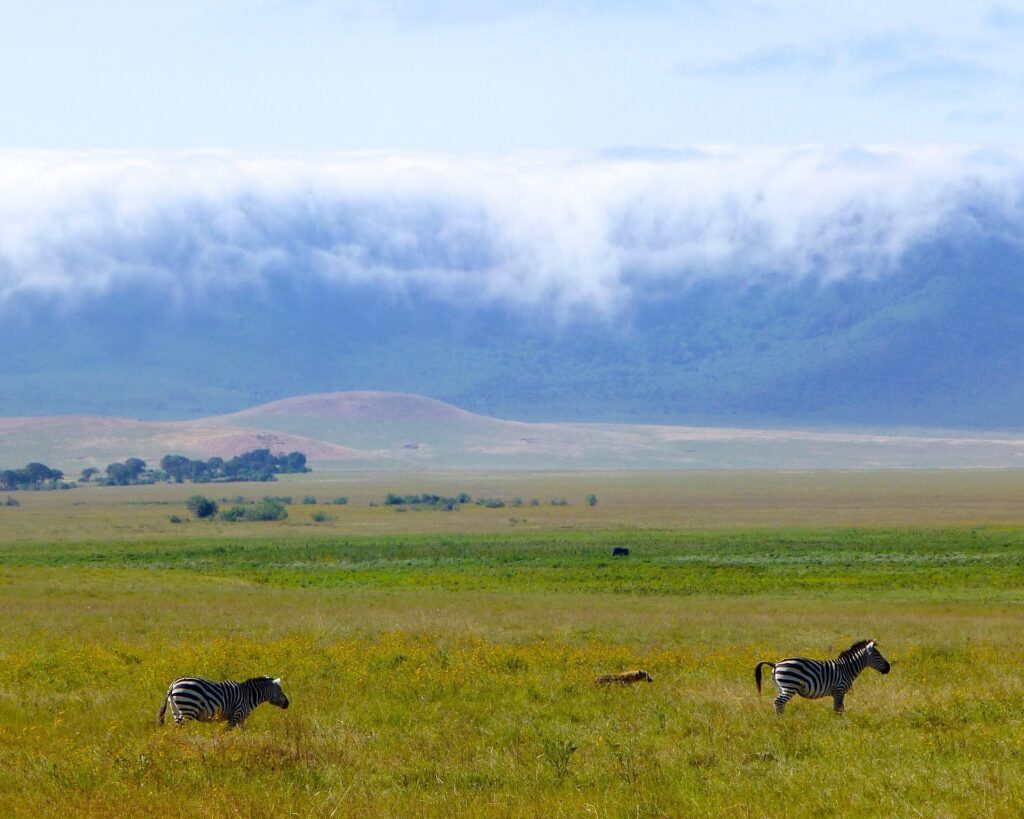
- Zebras and wildebeest grazing
- Hippos near water
- Hyenas moving through the grasslands
- Birds of prey searching for food
Your guide plays an important role during the game drive. Experienced guides understand animal behavior and can often notice details that visitors would otherwise miss.
There is no guarantee of seeing a particular animal, but that uncertainty is part of what makes a safari different from visiting a zoo.
9:00–10:00 AM: Breakfast in the Bush
Depending on the safari itinerary, you may return to camp for breakfast or enjoy a bush breakfast in a designated area.
Imagine sitting at a table surrounded by the sounds and landscapes of the Serengeti while enjoying a freshly prepared meal.
Breakfast might include:
- Fresh fruit
- Eggs
- Bread
- Sausages
- Cereal
- Tea
- Coffee
- Juice
A bush breakfast is not simply a meal. It is another opportunity to slow down and appreciate where you are.
10:00 AM–12:30 PM: Exploring the Serengeti
After breakfast, the game drive continues.
During the middle of the morning, wildlife activity can change as temperatures rise. Your guide may adjust the route based on recent sightings, water sources and animal movements.
This is also a good time to appreciate the Serengeti beyond the animals.
The landscape itself is part of the safari experience.
You may pass through open grasslands, rocky areas, woodland and seasonal watercourses.
Your guide can also explain the relationships between the landscape, plants, herbivores and predators that make the Serengeti ecosystem work.
12:30–2:30 PM: Lunch and a Break
By midday, many safari travelers take a break from the game drive.
If you are staying at a lodge or tented camp, lunch may be served at the property.
If your itinerary includes a picnic lunch, your guide will take you to an appropriate designated area.
This is usually a good time to relax, drink water and escape the strongest heat of the afternoon.
You may also have time to:
- Read a book
- Take photographs around camp
- Rest
- Enjoy the view
- Talk with fellow travelers
- Prepare your camera for the afternoon
A safari is not about being in the vehicle every minute of the day. Rest is an important part of the experience.
2:30–5:30 PM: Afternoon Game Drive
As the afternoon progresses and temperatures begin to drop, it is time to head out again.
Your guide may take you to a different part of the park or return to an area where wildlife was previously spotted.
Afternoon game drives can produce some memorable encounters.
You may find elephants gathering around water, giraffes moving across the plains or predators becoming active as the day cools.
Sometimes the best moments are completely unexpected.
A guide may suddenly stop the vehicle because they have spotted something in the distance.
Everyone reaches for their binoculars.
The vehicle goes quiet.
You wait.
And then you realize there is a leopard lying beneath a tree.
That is safari.
5:30–6:30 PM: Sunset in the Serengeti
As the sun begins to disappear, the Serengeti changes color.
The grasslands can turn golden and the sky may shift through shades of orange, pink and red.
Depending on park regulations and your itinerary, your guide will begin the journey back toward your accommodation.
This is a good time to put the camera down for a moment and simply enjoy the landscape.
The Serengeti is not only about wildlife sightings. The scenery, silence and changing light are part of the experience.
7:00 PM: Dinner at Your Lodge or Camp
Back at camp or your lodge, dinner is usually a relaxed affair.
You can talk about the day’s sightings, compare photographs and discuss what you hope to see tomorrow.
Depending on the accommodation, dinner may be served in a restaurant, dining tent or another designated dining area.
After dinner, some camps offer a chance to sit around a campfire and enjoy the evening.
8:00–10:00 PM: A Quiet Evening Under the African Sky
The Serengeti becomes a completely different place after dark.
Away from the lights of the city, the night sky can be spectacular.
You may hear distant sounds from the surrounding bush while relaxing at camp.
Your guide or camp staff may also explain important safety procedures for moving around the property after dark.
Then it is time to rest.
Tomorrow will bring another safari day.
And there is no way to know exactly what it will bring.
What Do You Eat on a Serengeti Safari?
Food is an important part of the safari experience.
Most lodges and camps serve a mixture of local and international dishes.
Typical meals may include:
Breakfast
- Eggs
- Bread
- Fresh fruit
- Cereal
- Tea
- Coffee
- Juice
Lunch
- Rice
- Pasta
- Meat or chicken
- Vegetables
- Salads
- Fresh fruit
Dinner
Dinner varies by accommodation but can include meat, chicken, fish, vegetables, rice, potatoes, pasta and other dishes.
Special dietary requirements should be communicated when booking so the accommodation and safari team can prepare accordingly.
What Should You Wear on a Serengeti Safari?
Comfort is more important than fashion.
Choose lightweight, breathable clothing during the warmer parts of the day and bring a warm layer for early mornings and evenings.
Useful items include:
- Comfortable trousers
- Lightweight shirts
- Warm jacket or fleece
- Comfortable walking shoes
- Sun hat
- Sunglasses
- Sunscreen
- Insect repellent
- Small day bag
Neutral colors such as beige, brown, green and khaki are commonly recommended for safari.
What Should You Bring on a Serengeti Safari?
A few practical items can make your safari more comfortable.
Binoculars
Binoculars allow you to observe animals that may be far from the vehicle.
Camera
Bring extra batteries or a power bank, especially if you plan to take many photographs.
Water Bottle
Staying hydrated is important, particularly during long game drives.
Sunscreen
The African sun can be strong, even when temperatures do not feel extreme.
Light Jacket
Morning game drives can be surprisingly cool.
Insect Repellent
Useful around camps and lodges, particularly in areas where mosquitoes are present.
How Long Do You Spend in the Safari Vehicle?
This depends on your itinerary and what you want to experience.
A full-day game drive can involve several hours in the vehicle, with regular stops for wildlife viewing, photography, meals and scenery.
Private safaris provide greater flexibility because your guide can often adjust the timing according to your interests.
If you prefer a slower pace, you can discuss this when planning your itinerary.
What Makes a Private Serengeti Safari Different?
A private safari gives you more control over your daily schedule.
You can discuss with your guide:
- When to leave camp
- How long to spend at wildlife sightings
- Photography stops
- Areas you would like to explore
- Whether you want a full-day or split game drive
- Your preferred pace
This can be particularly useful for photographers, families and travelers who want a more personalized experience.
Is Every Safari Day the Same?
No.
One of the best things about a Serengeti safari is that every day can be different.
You may spend one morning following a pride of lions and another watching a herd of elephants.
Weather can change.
Wildlife moves.
Road conditions vary.
Your guide may receive information about an interesting sighting and change the route.
The itinerary provides a framework, but nature determines much of what happens during the day.
A Safari Is About More Than Seeing Animals
When people imagine a Serengeti safari, they often picture lions, elephants and wildebeest.
Those encounters are certainly an important part of the experience.
But a safari also gives you the chance to experience the rhythm of an ecosystem.
It is waking before sunrise.
It is watching the first light spread across the plains.
It is listening to birds while drinking morning coffee.
It is following fresh tracks through the grass.
It is sitting quietly while elephants pass nearby.
It is watching the sunset after a long day in the bush.
And it is returning to camp wondering what tomorrow might bring.
Plan Your Serengeti Safari with Eve On Safari
At Eve On Safari, we create Tanzania safari experiences around your travel dates, interests and preferred pace.
Whether you want a short Serengeti safari or a longer northern Tanzania itinerary combining Serengeti, Ngorongoro and Tarangire, we can help you plan your journey.
Our safari vehicles are designed for comfort and are equipped to handle Tanzania’s varied terrain, allowing you to explore the national parks while enjoying good visibility and a comfortable game-drive experience.
Ready to Experience the Serengeti?
Call or WhatsApp: +255 768 611 005
Email: info@eveonsafari.com
Eve On Safari
Tanzania safari experiences designed around your journey.
Frequently Asked Questions
What time does a Serengeti safari start?
Morning game drives commonly begin around sunrise, although the exact departure time depends on your accommodation, itinerary and the time of year.
What happens on a typical Serengeti safari day?
A typical day may include an early morning game drive, breakfast, additional wildlife viewing, lunch, an afternoon game drive and a return to camp around sunset.
Can I have a private game drive?
Yes. Private safari arrangements allow greater flexibility with departure times, routes and the amount of time spent at wildlife sightings.
Is breakfast included on safari?
Most safari packages include breakfast, lunch and dinner, but meals depend on the package you book. Always check the inclusions when making your reservation.
Will I see the Big Five?
The Serengeti supports lions, leopards, elephants and buffalo, as well as many other species. Black rhinoceros are also present in parts of the ecosystem. However, wildlife sightings are never guaranteed.
Is the Serengeti suitable for first-time safari travelers?
Yes. The Serengeti is one of Tanzania’s most established safari destinations and can be included in itineraries for first-time visitors as well as experienced safari travelers.
How many days should I spend in the Serengeti?
Three or more days gives you more time to explore different areas and increases the flexibility of your safari. The ideal duration depends on your overall Tanzania itinerary and travel budget.