Tarangire National Park: Tanzania’s Best-Kept Elephant Secret
When travelers think about a safari in Tanzania, the Serengeti and Ngorongoro Crater often dominate the conversation. Yet tucked into Tanzania’s northern safari circuit is a destination with its own distinctive character: Tarangire National Park.
Known for its spectacular elephant herds, enormous baobab trees, seasonal wildlife movements, and the life-giving Tarangire River, the park offers a safari experience that feels both intimate and dramatic.
TANAPA describes Tarangire as the “Paradise of Elephants,” highlighting its high concentration of elephants and its famous baobab-studded scenery. The park covers approximately 2,850 square kilometres.
For travelers looking beyond Tanzania’s better-known safari destinations, Tarangire can be an especially rewarding addition to a northern Tanzania itinerary.
Where Is Tarangire National Park?
Tarangire National Park is located in northern Tanzania, within the country’s famous northern safari circuit.
The park is accessible from Arusha, making it a convenient destination for travelers combining Tarangire with other attractions such as Lake Manyara, the Ngorongoro Conservation Area, and Serengeti National Park.
According to TANAPA, Tarangire is roughly 2.5 to 3 hours by road from Arusha, depending on road and traffic conditions. The park can also be reached by air using the Kuro Airstrip.
Its location makes Tarangire an excellent starting point for a multi-day Tanzania safari.
Why Is Tarangire Famous for Elephants?
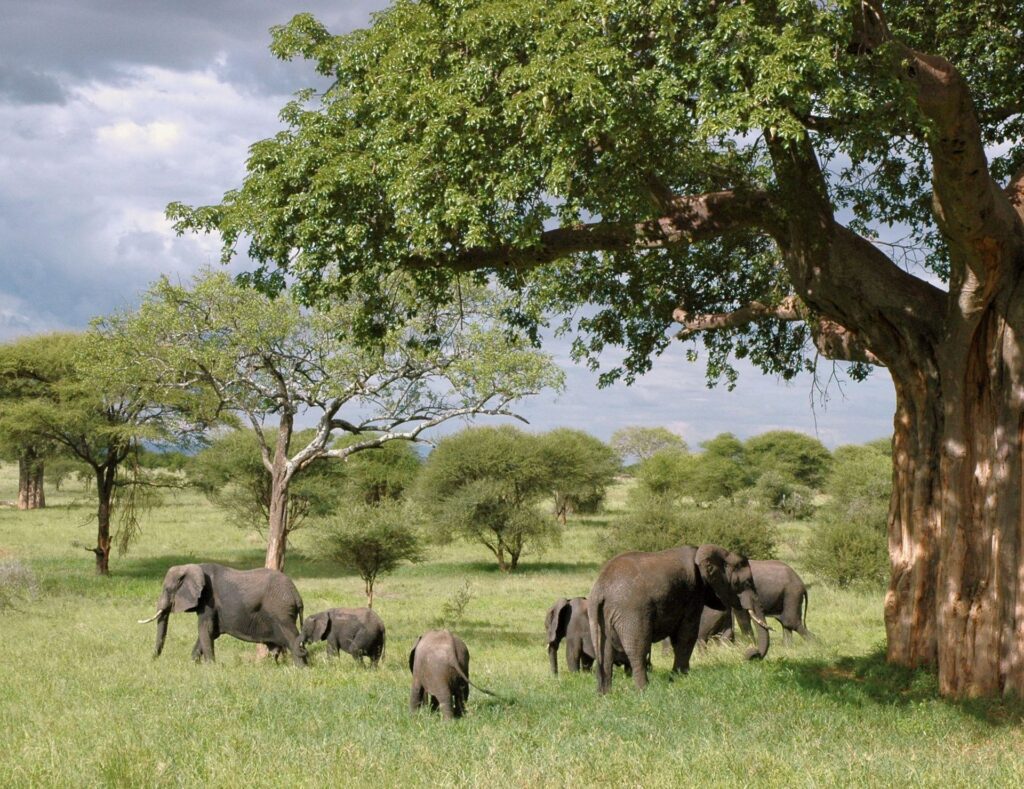
The defining attraction of Tarangire National Park is its elephants.
Large elephant families can often be seen moving through the park’s woodland, crossing open plains, or gathering around water sources. During the dry season, wildlife becomes increasingly concentrated around permanent and seasonal water sources, including the Tarangire River.
TANAPA currently highlights a population of more than 3,000 elephants associated with the park and describes Tarangire as having one of Tanzania’s highest elephant concentrations.
However, the wider Tarangire ecosystem is much larger than the national park itself. Research from the Tanzania Wildlife Research Institute describes the Tarangire-Manyara Ecosystem as a roughly 35,000-square-kilometre landscape supporting thousands of elephants.
This distinction matters because elephants do not simply remain inside the park boundaries.
The Great Elephant Movement
One of the most fascinating aspects of Tarangire is the seasonal movement of wildlife.
During the rainy months, animals can spread across the wider ecosystem as fresh grass and water become available. As the dry season progresses, water and food become more limited, encouraging wildlife to concentrate around key areas of Tarangire.
Research tracking elephants in the Tarangire-Manyara ecosystem has documented seasonal movements extending beyond the national park. One study recorded elephants traveling approximately 100 kilometres southeast of the park boundary during part of the dry season.
This seasonal movement is one reason conservation in Tarangire cannot be considered only within the park itself. Wildlife corridors and surrounding community areas are important parts of the larger ecosystem.
Ancient Baobabs: The Other Icon of Tarangire
Elephants may be Tarangire’s stars, but the park’s baobab trees create much of its visual identity.
These enormous trees rise above the savanna, giving the landscape a distinctive African character. Some baobabs in Tarangire are believed to be centuries old, with TANAPA highlighting trees that can reach around 30 metres in height.
Seeing an elephant beneath a giant baobab is one of the classic photographic scenes of a Tarangire safari.
The combination of elephants, dry grasslands, acacia woodland and massive baobabs makes the park visually different from the expansive grasslands associated with the Serengeti.
The Tarangire River: A Lifeline for Wildlife
The park takes its name from the Tarangire River, an important source of water within the ecosystem.
During the dry season, water becomes increasingly valuable to wildlife. Elephants, buffalo, zebras and other animals gather around available water sources, creating excellent opportunities for wildlife viewing.
For safari visitors, this seasonal concentration can make the dry months particularly rewarding.
The river is not simply a scenic feature. It is part of the ecological system that helps support wildlife through challenging periods of the year.
When Is the Best Time to Visit Tarangire National Park?
The dry season, generally June to October, is widely considered an excellent period for wildlife viewing in Tarangire because animals tend to concentrate around water and vegetation becomes less dense.
During this period, elephants can be particularly prominent, while other wildlife gathers around the Tarangire River and swamp areas.
The wet season brings a different experience. The landscape becomes greener, migratory animals disperse more widely, and the park can feel quieter.
There is therefore no single season that suits every traveler.
If your priority is seeing large concentrations of elephants and other wildlife, the dry season is an important period to consider. If you prefer greener scenery and potentially fewer visitors, the rainy months offer a different perspective.
Wildlife You Can See in Tarangire
Although elephants are the headline attraction, Tarangire supports a wide range of wildlife.
Visitors may encounter:
-
Elephants
-
Lions
-
Leopards
-
Hyenas
-
Zebras
-
Wildebeest
-
Buffalo
-
Giraffes
-
Impalas
-
Gazelles
-
Eland
-
Oryx
-
Gerenuk
-
Ostriches
-
Kori bustards
-
Ground hornbills
TANAPA also highlights Tarangire as an important birding destination, with more than 550 bird species recorded.
The diversity of habitats—from riverine forests and swamps to open plains and woodland—helps explain why Tarangire supports such a broad range of species.
Tarangire vs. Serengeti: What Makes It Different?
Tarangire and Serengeti offer very different safari environments.
The Serengeti is famous for its enormous open plains and the annual movements of wildebeest and zebra. Tarangire, by contrast, is particularly associated with elephants, baobabs, woodland habitats and seasonal concentrations around water.
For many travelers, the two parks work well together rather than being viewed as alternatives.
A northern Tanzania itinerary can combine Tarangire with the Ngorongoro Conservation Area and Serengeti, creating a journey through several dramatically different ecosystems.
Safari Experiences in Tarangire National Park
A traditional game drive remains one of the most popular ways to explore Tarangire.
Depending on the safari operator and park regulations, visitors may also experience activities such as:
-
Game drives
-
Guided walking experiences
-
Photography safaris
-
Bush meals
-
Sundowners
-
Selected balloon safari experiences
TANAPA lists game viewing, guided walking safaris, photographic safaris and bush experiences among the activities available in the park.
Walking safaris require authorized guides or rangers, and visitors should follow all park safety instructions.
Conservation and the Future of Tarangire’s Elephants
The success of Tarangire’s elephant conservation also creates challenges.
Elephants travel across large landscapes, and some of their seasonal range lies outside protected-area boundaries. As human settlements, farming and other land uses expand, interactions between people and elephants can become more frequent.
Research in the wider Tarangire ecosystem has documented the importance of community areas and wildlife management areas for conserving large herbivores.
Long-term elephant conservation therefore depends not only on protecting the national park but also on maintaining connectivity across the wider ecosystem.
For visitors, this provides an important reminder: a safari destination is part of a living landscape shared by wildlife and local communities.
How to Plan a Tarangire Safari
A visit to Tarangire is relatively easy to incorporate into a northern Tanzania safari.
Getting There
From Arusha, visitors can travel by road toward the park. TANAPA estimates the journey at approximately 2.5 to 3 hours under suitable conditions.
How Long Should You Stay?
A one-day visit can provide an introduction to Tarangire, particularly for travelers continuing toward other northern safari destinations.
Spending one or two nights, however, gives you more time for morning and afternoon game drives and allows you to experience the changing character of the park throughout the day.
What Should You Bring?
Useful items include:
-
Binoculars
-
Camera and spare batteries
-
Sunscreen
-
Hat
-
Neutral-colored clothing
-
Comfortable walking shoes
-
Drinking water
-
Insect repellent
TANAPA recommends following guide instructions, maintaining safe distances from wildlife and remaining in vehicles except at designated locations.
Why Tarangire Deserves a Place on Your Tanzania Safari
Tarangire National Park offers something different from the classic image of Tanzania’s endless grassland safari.
Here, elephants move beneath giant baobabs, wildlife gathers around seasonal water sources, birds fill the woodland and the landscape changes dramatically between wet and dry seasons.
Its importance also extends beyond the park boundary. The wider Tarangire-Manyara ecosystem demonstrates how wildlife depends on connected landscapes and seasonal movement routes.
For travelers seeking an elephant-focused safari surrounded by striking scenery, Tarangire National Park offers one of Tanzania’s most distinctive wildlife experiences.
It may not always receive the same international attention as the Serengeti, but once you see a herd of elephants crossing the golden Tarangire landscape beneath an ancient baobab, it is easy to understand why the park has earned its reputation as an elephant paradise.
Frequently Asked Questions About Tarangire National Park
Is Tarangire National Park worth visiting?
Yes, Tarangire offers a distinctive safari experience centered around elephants, baobabs, seasonal wildlife concentrations and diverse habitats. It is also conveniently located on Tanzania’s northern safari circuit.
What is Tarangire National Park famous for?
Tarangire is especially famous for its large elephant herds, ancient baobab trees and dry-season wildlife concentrations around the Tarangire River.
What is the best month to visit Tarangire?
The dry-season period from roughly June to October is particularly suitable for wildlife viewing because animals often concentrate around water sources. However, the wet season provides greener landscapes and a different safari experience.
How far is Tarangire from Arusha?
TANAPA states that Tarangire is approximately 2.5 to 3 hours from Arusha by road, depending on conditions.
Can I see elephants in Tarangire?
Elephants are one of Tarangire’s signature attractions. The park and surrounding ecosystem support a substantial elephant population, and large family groups can be encountered during safari drives.
Is Tarangire part of the northern Tanzania safari circuit?
Yes. Tarangire is commonly visited as part of a northern Tanzania itinerary that can also include destinations such as Lake Manyara, Ngorongoro and Serengeti.