Tarangire in the Dry Season: Why June–October Is Prime Time
If you’re planning a Tanzania safari, Tarangire in the dry season deserves a place near the top of your itinerary. From June through October, the park’s shrinking water sources concentrate wildlife around the Tarangire River and other permanent water areas, creating excellent opportunities for game viewing.
covers approximately 2,850 square kilometres and is famous for its elephants, enormous baobab trees, diverse birdlife, and seasonal wildlife movements. Tanzania National Parks (TANAPA) identifies June–October as the park’s dry season, while its visitor information notes that the period is particularly popular for visitors and recommends booking accommodation well in advance.
But what exactly makes these months so special?
Why Visit Tarangire Between June and October?
The dry season changes the landscape dramatically. As seasonal water sources disappear, wildlife becomes increasingly concentrated around dependable sources such as the Tarangire River and Silale Swamp.
TANAPA describes the Tarangire River as a crucial dry-season lifeline, while its park information highlights the concentration of elephants and other large mammals during this period.
For safari visitors, this can mean:
-
Better opportunities to spot wildlife around water.
-
Large elephant gatherings.
-
Excellent photographic conditions.
-
Clearer views across the savanna.
-
Comfortable mornings for game drives.
-
Strong birdwatching opportunities.
-
Dramatic golden landscapes and baobab scenery.
The result is a classic East African safari experience in a landscape that looks and feels distinctly different from the greener months.
1. Elephant Viewing Is a Major Highlight
Tarangire is particularly famous for elephants.
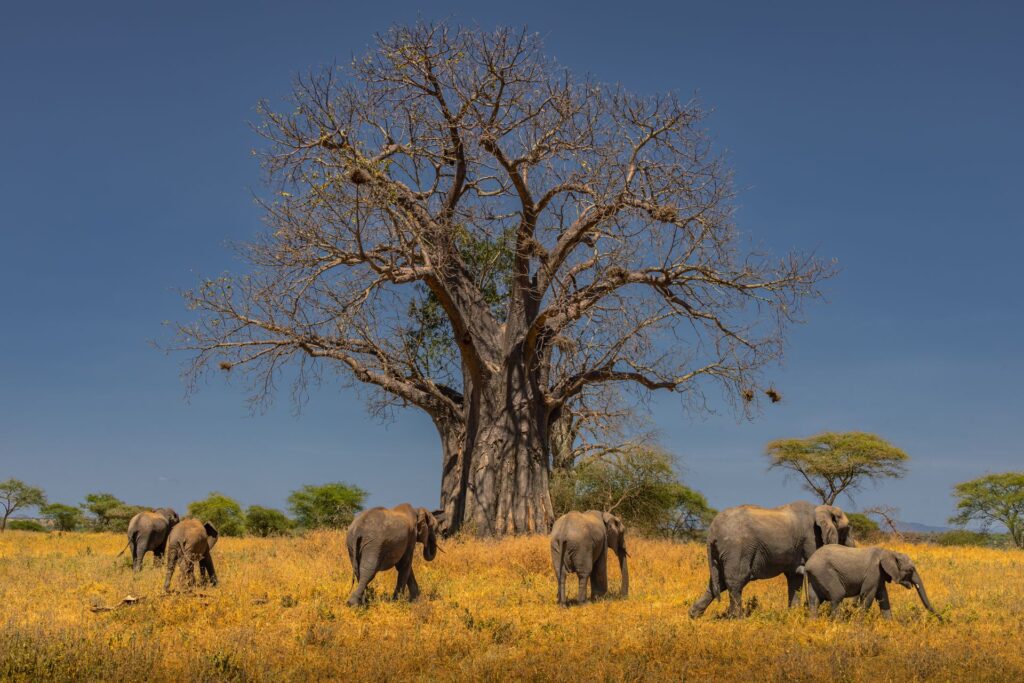
During the dry months, elephants can gather around remaining water sources, sometimes forming impressive family groups. TANAPA describes Tarangire as being renowned for its large elephant herds and calls the park a major dry-season refuge for wildlife.
Watching elephants approach a waterhole, move beneath baobabs, or cross the dry river landscape can be one of the most memorable parts of a Tarangire safari.
For photographers, the combination of elephants, dusty tracks and enormous baobab trees creates especially distinctive scenes.
2. Wildlife Becomes Easier to Find
One of the biggest advantages of the Tarangire dry season is wildlife concentration.
As temporary water sources dry up, animals increasingly depend on permanent water. This naturally creates places where safari guides can focus their game drives.
TANAPA’s visitor information describes the dry season as a period when animals flock to the Tarangire River, while its attractions page highlights the role of Silale Swamp as another important dry-season area for elephants, buffalo and birds.
You may encounter:
-
Elephants
-
Buffalo
-
Zebra
-
Wildebeest
-
Giraffe
-
Antelope
-
Lions
-
Leopards
-
Hyenas
-
Ostriches
-
Numerous smaller mammals and birds
Wildlife sightings are never guaranteed, of course. Safari conditions vary from day to day, and animals can move across a large ecosystem.
3. The Tarangire River Becomes the Center of the Action
The Tarangire River is central to the park’s dry-season wildlife story.
When surrounding areas become progressively drier, dependable water becomes increasingly valuable. Wildlife gathers around remaining water sources, creating opportunities to watch different species interact within the same area.
A patient game drive near the river can therefore be particularly rewarding. Instead of constantly searching across vast areas, you may be able to spend time observing animals coming to drink, rest or move through the surrounding vegetation.
This is one reason Tarangire is so appealing to visitors who enjoy slower, observation-focused safaris.
4. Silale Swamp Offers Another Wildlife Hotspot
Silale Swamp is another important feature of Tarangire’s dry-season landscape.
Although the name suggests a wet environment, the swamp and its surrounding habitat remain important to wildlife as the broader landscape dries. TANAPA identifies Silale Swamp as a dry-season lifeline supporting buffalo, elephants and birdlife.
The varied habitats around the swamp also increase the diversity of animals and birds you can encounter during a game drive.
5. June to October Offers Excellent Photography
For photographers, the dry season brings together several elements that make Tarangire visually striking.
The landscape becomes dominated by:
-
Golden grasses
-
Blue skies
-
Sculptural baobabs
-
Dusty safari tracks
-
Dry riverbeds
-
Wildlife silhouettes
-
Warm afternoon light
The contrast between massive elephants and ancient-looking baobabs is particularly characteristic of Tarangire.
Early morning and late afternoon are usually especially attractive for photography because the light is softer and warmer than during the middle of the day.
6. The Weather Is Generally Favourable for Safari
Tanzania’s dry season runs from June to October, according to TANAPA. The national park authority notes that dry-season conditions generally make wildlife easier to spot around water sources.
Tarangire’s temperatures can vary considerably between morning and afternoon. TANAPA’s park documentation notes that temperatures can be considerably cooler during July than during the hotter January–February period.
For travelers, this means packing for changing temperatures is important.
A useful safari packing list includes:
-
Lightweight layers
-
A warm fleece or jacket for early mornings
-
Comfortable trousers
-
Sun protection
-
Sunglasses
-
A wide-brimmed hat
-
Binoculars
-
Camera equipment
-
Reusable water bottle
-
Insect repellent
7. Birdwatching Is Excellent Too
Tarangire isn’t only about elephants.
The park is also an important birding destination, with more than 500 recorded bird species according to TANAPA sources. Its habitats include riverine forests, acacia woodland, seasonal swamps and open savanna.
Birders can look for species such as:
-
Kori bustards
-
Ostriches
-
Lovebirds
-
Bee-eaters
-
Hornbills
-
Raptors
-
Starlings
The dry season can provide excellent visibility because vegetation is less dense in many areas, although bird activity and species presence naturally vary throughout the year.
8. The Baobab Landscape Makes Tarangire Unique
One of the first things you’ll notice in Tarangire is the abundance of baobab trees.
These enormous trees rise above the savanna and create some of the most recognizable scenery in northern Tanzania. TANAPA specifically highlights Tarangire’s baobab-dotted landscapes as one of the park’s defining attractions.
During the dry season, golden grass, bare branches and towering baobabs combine to create a particularly dramatic landscape.
This makes Tarangire worthwhile even when you’re not actively searching for wildlife.
9. June, July, August, September or October?
Although all these months fall within the dry season, conditions can change as the season progresses.
June
June marks the beginning of the main dry period. The landscape can still retain some greenery after the preceding rains, while increasingly dry conditions begin concentrating wildlife.
July and August
These months generally offer classic dry-season safari conditions, with cooler mornings and increasingly concentrated wildlife around reliable water sources.
September
By September, the landscape is typically much drier. Water becomes increasingly important to wildlife, potentially making river and swamp areas particularly productive for game viewing.
October
October can be one of the driest and hottest periods before the short rains. TANAPA’s historical park material notes particularly high concentrations of large animals during the height of the dry season in October.
The trade-off is that temperatures can be higher, especially later in the day.
Is Tarangire Crowded in the Dry Season?
June–October is a popular period for safari travel, so some areas can experience more visitors than during quieter seasons.
TANAPA’s current visitor guide specifically recommends booking accommodation well in advance for the peak dry season.
However, Tarangire’s large size and varied habitats mean that the experience isn’t simply about how many vehicles are in the park. A knowledgeable guide and flexible game-drive strategy can make a significant difference.
How Many Days Do You Need in Tarangire?
For travelers exploring Tanzania’s Northern Circuit, two nights and three days can provide a good introduction to Tarangire.
A longer stay allows more time for:
-
Multiple game drives
-
Different areas of the park
-
Elephant watching
-
Birdwatching
-
Photography
-
Relaxed morning and afternoon drives
Tarangire can also work well as an opening stop before continuing toward Lake Manyara, the Ngorongoro Conservation Area and Serengeti.
What Should You Expect on a Dry-Season Safari?
A typical day might begin before sunrise, when temperatures are cool and wildlife is becoming active.
After breakfast or an early game drive, you may spend the morning exploring riverine areas, woodland and open savanna before the midday heat becomes stronger.
Afternoon drives offer another opportunity to search for wildlife, with the landscape often taking on a warm golden appearance toward sunset.
Remember that wildlife follows its own schedule. A successful safari is not simply about ticking animals off a checklist; patience and time spent observing animal behaviour can be just as rewarding as finding a rare sighting.
Tarangire Dry Season vs. Green Season
The dry season is particularly strong for concentrated wildlife viewing, but the greener months have their own appeal.
| Feature | June–October Dry Season | Green Season |
|---|---|---|
| Wildlife concentration | High around reliable water | More dispersed |
| Elephant viewing | Excellent opportunities | Still possible |
| Landscape | Golden and dry | Green and lush |
| Photography | Strong contrast and clear visibility | Vibrant colors and skies |
| Birding | Excellent | Excellent, with seasonal variety |
| Rain | Generally limited | More frequent |
| Visitor demand | Higher | Often lower |
There isn’t one perfect season for every traveler. The best choice depends on whether your priority is concentrated wildlife, lush scenery, birding, photography, or quieter travel.
Tips for Visiting Tarangire in June–October
To make the most of your safari:
-
Book early. June–October is a popular travel period, and TANAPA recommends advance accommodation planning.
-
Bring layers. Early mornings can be cool even when afternoons become hot.
-
Carry binoculars. Tarangire’s birdlife and distant wildlife make them extremely useful.
-
Stay hydrated. Dry-season conditions can be hot and dusty.
-
Protect yourself from the sun. Use sunscreen, sunglasses and a hat.
-
Follow your guide’s instructions. Never approach or disturb wildlife.
-
Remain in designated areas. TANAPA requires visitors to follow park regulations and stay on designated tracks where applicable.
-
Allow enough time. Two or more nights gives you a better chance to experience different habitats.
Frequently Asked Questions About Tarangire in the Dry Season
Is June to October the best time to visit Tarangire?
June to October is widely considered a prime period for wildlife viewing because dry conditions concentrate animals around dependable water sources. TANAPA also identifies June–October as Tarangire’s dry season.
Why is Tarangire famous for elephants?
Tarangire is renowned for its large elephant population and dry-season elephant gatherings. The Tarangire River provides an important water source during the dry months.
Can you see lions in Tarangire?
Yes. Lions occur in Tarangire, and TANAPA lists lions among the park’s wildlife attractions. Sightings, like all wild-animal encounters, cannot be guaranteed.
Is Tarangire worth visiting in October?
October falls within Tarangire’s dry season and can offer excellent wildlife viewing as water becomes increasingly important. It can also be hotter than earlier dry-season months. TANAPA’s park material describes October as the height of the dry season for large-animal concentration.
How far is Tarangire from Arusha?
TANAPA’s visitor information places Tarangire roughly 2.5–3 hours by road from Arusha, depending on the route and conditions.
Final Thoughts: Why Tarangire Belongs on a Dry-Season Safari
Tarangire in the dry season is about concentration, contrast and incredible wildlife encounters.
From elephants gathering around water to lions moving through the savanna, birds filling the woodland and baobabs towering over the landscape, June–October provides many of the ingredients travelers associate with an unforgettable Tanzanian safari.
The dry season doesn’t simply make Tarangire easier to explore—it reveals the ecological rhythm of the park. As water becomes scarce, the river and remaining wetlands become magnets for wildlife, transforming Tarangire into one of northern Tanzania’s most rewarding safari destinations.
If your Tanzania itinerary includes the Northern Circuit, June through October is an excellent window to experience Tarangire’s elephants, landscapes and dry-season wildlife spectacle