Kilimanjaro Routes Compared: Machame, Lemosho, Marangu, and More
Choosing the right route is one of the most important decisions when planning a Mount Kilimanjaro climb.
Although every summit route ultimately heads toward Uhuru Peak at 5,895 meters (19,341 feet), the experience can be very different depending on the route you choose. Some routes spend more time on the mountain, some offer hut accommodation, while others provide quieter approaches and more gradual acclimatization opportunities.
If you are researching Kilimanjaro routes, you will commonly encounter Machame, Lemosho, Marangu, Rongai, Umbwe, and the Northern Circuit. TANAPA’s current visitor information identifies six routes that can take climbers to Kibo’s summit, with Mweka used primarily as a descent route for several southern and western approaches.
In this guide, we compare the major Kilimanjaro routes, their characteristics, accommodation styles, scenery, trekking demands, and the type of traveler each route may suit.
Mount Kilimanjaro at a Glance
Mount Kilimanjaro is Africa’s highest mountain, rising to 5,895 meters (19,341 feet) above sea level.
Kilimanjaro National Park encompasses three major volcanic features: Kibo, Mawenzi, and Shira. Kibo is the summit-bearing volcanic cone, while Mawenzi and the Shira Plateau contribute to the mountain’s distinctive landscape.
The mountain also contains several ecological zones, ranging from montane forest through heath and moorland to alpine desert and the summit environment.
That changing landscape is one reason a Kilimanjaro trek is much more than simply walking toward the summit.
Kilimanjaro Routes Comparison
| Route | Typical Character | Accommodation | Main Feature |
|---|---|---|---|
| Machame | Scenic, varied, popular | Tents | Dramatic southern approach |
| Lemosho | Scenic, longer approach | Tents | Western approach and acclimatization opportunities |
| Marangu | Direct and established | Mountain huts | Hut accommodation |
| Rongai | Northern approach | Tents | Quieter northern side |
| Umbwe | Steep and direct | Tents | Challenging ascent |
| Northern Circuit | Long, gradual itinerary | Tents | Broad circuit around Kibo |
| Mweka | Descent route | Tents | Primarily used for descent |
TANAPA confirms that Marangu has mountain huts, while the other main routes use designated tented camps operated through licensed arrangements.
1. Machame Route
The Machame Route is one of the best-known approaches to Kilimanjaro.
It begins on the southern side of the mountain and passes through several dramatic environments before joining the upper mountain routes toward the summit.
The route is known for its varied scenery and trekking terrain.
Machame Route highlights
- Scenic southern approach
- Forest environment at lower elevations
- Heath and moorland landscapes
- Dramatic mountain views
- Camping experience
- Multiple days on the mountain
The route eventually connects with the upper-mountain trail system before the summit attempt and descent.
Who might consider Machame?
Machame can be a good option for travelers who want:
- A scenic trekking experience
- Camping rather than hut accommodation
- Varied terrain
- A classic Kilimanjaro climbing experience
- A route with a well-established trekking infrastructure
Machame accommodation
Machame uses tented camps rather than the mountain huts found on Marangu. TANAPA confirms that routes other than Marangu are serviced by designated tented camps through licensed operators.
2. Lemosho Route
The Lemosho Route approaches Kilimanjaro from the west.
One of its major attractions is the opportunity to experience the western side of the mountain before connecting with the higher sections of the trek.
Lemosho is generally associated with longer itineraries, which can provide additional time for acclimatization.
Lemosho Route highlights
- Western approach
- Scenic landscapes
- Shira Plateau
- Longer trekking options
- Camping
- More gradual progression than some shorter itineraries
The Shira Plateau is one of Kilimanjaro’s notable landscapes. TANAPA describes it as a high-altitude caldera with distinctive moorland scenery.
Who might consider Lemosho?
Lemosho may appeal to travelers who want:
- A longer Kilimanjaro itinerary
- Scenic variety
- More time on the mountain
- A western approach
- A camping-based adventure
For travelers who have enough time, choosing an itinerary with additional acclimatization time can be an important consideration. TANAPA specifically notes that longer climbs increase the opportunity for acclimatization.
3. Marangu Route
The Marangu Route is one of Kilimanjaro’s most established routes and is distinctive because it uses mountain huts rather than tents for overnight accommodation.
The route approaches Kibo from the southeast.
Marangu Route highlights
- Established trail
- Mountain hut accommodation
- Forest scenery
- Direct approach toward the summit
- Fewer camping requirements
The huts include accommodation at Mandara, Horombo, and Kibo, according to TANAPA’s current visitor guide.
Who might consider Marangu?
Marangu may appeal to travelers who prefer:
- Hut accommodation
- A more straightforward trekking setup
- Less camping equipment
- An established route
Because the accommodation system differs from the camping routes, Marangu offers a distinctly different experience on the mountain.
4. Rongai Route
The Rongai Route approaches Kilimanjaro from the northern side, near the Tanzania-Kenya border.
This gives trekkers a different perspective of the mountain compared with southern and western approaches.
Rongai Route highlights
- Northern approach
- Different mountain perspective
- Forest and highland landscapes
- Camping
- Connection with the upper mountain
Rongai is one of the six routes identified by TANAPA as a summit-access route.
Who might consider Rongai?
Rongai may be attractive to travelers interested in:
- The northern side of Kilimanjaro
- A different approach to the mountain
- A camping trek
- A route that can be combined with a broader northern Tanzania itinerary
5. Umbwe Route
The Umbwe Route is known for its steep and direct character.
It approaches the mountain from the southern side and gains elevation relatively quickly.
Because of its steep nature, it is generally more appropriate for experienced trekkers or people who understand the demands of a more direct mountain ascent.
Umbwe Route highlights
- Steep approach
- Dramatic terrain
- Southern access
- Camping
- Fast elevation gain
TANAPA identifies Umbwe as one of the mountain’s summit-access routes.
Who might consider Umbwe?
Umbwe may appeal to trekkers who specifically want:
- A steeper route
- A more direct approach
- A challenging trekking experience
However, travelers should discuss the itinerary carefully with a qualified operator, particularly because acclimatization is an important consideration on Kilimanjaro.
6. Northern Circuit Route
The Northern Circuit is the longest and most extensive of the commonly marketed Kilimanjaro itineraries.
Rather than taking a direct approach toward the summit, the route travels around much of the northern side of Kibo before joining the summit section.
This creates a longer experience on the mountain.
Northern Circuit highlights
- Extended itinerary
- Northern side of Kilimanjaro
- Broad scenic experience
- More time for acclimatization
- Camping
- Less direct approach
The longer duration is particularly relevant because TANAPA notes that spending more days on the mountain can provide greater opportunity for acclimatization.
Who might consider the Northern Circuit?
It can be particularly appealing to travelers who:
- Have more time available
- Prefer a longer itinerary
- Want to explore more of Kilimanjaro
- Want an itinerary designed with additional acclimatization time
What About the Mweka Route?
Mweka is sometimes listed alongside the main Kilimanjaro routes, but it is important to understand its role.
Mweka is primarily a descent route.
TANAPA identifies Mweka as a route intended for descent by climbers using several western and southern ascent routes.
Therefore, when comparing routes for your climb, focus on the ascent routes rather than treating Mweka as a standard independent ascent option.
Kilimanjaro Route Comparison by Accommodation
Accommodation is one of the clearest differences between routes.
Marangu
Mountain huts
Marangu has designated mountain huts at Mandara, Horombo, and Kibo.
Machame
Tented camps
Lemosho
Tented camps
Rongai
Tented camps
Umbwe
Tented camps
Northern Circuit
Tented camps
For all camping routes, your licensed trekking operator handles the practical camping arrangements.
Kilimanjaro Routes and Acclimatization
Altitude is one of the most important factors when choosing your route.
You are not simply climbing a tall mountain; you are ascending to almost 5,900 meters above sea level.
No route can guarantee that someone will avoid altitude illness. However, itinerary design matters.
TANAPA advises climbers to ascend slowly, choose itineraries with acclimatization days, stay hydrated, and report symptoms to their guide.
When comparing routes, therefore, don’t look only at the number of kilometers.
Consider:
- Number of days
- Elevation profile
- Sleeping elevations
- Acclimatization opportunities
- Daily walking distances
- Summit-night schedule
A longer itinerary may give your body more time to adapt to altitude.
Which Kilimanjaro Route Has the Best Scenery?
Scenery is subjective, but each route offers a different perspective of the mountain.
Machame
Known for its varied southern landscapes.
Lemosho
Offers a western approach and access toward the Shira Plateau.
Marangu
Provides a more established route through the southeastern side.
Rongai
Offers a northern perspective.
Umbwe
Provides dramatic, steep mountain terrain.
Northern Circuit
Offers an extended journey around the northern side of Kibo.
Kilimanjaro’s changing ecological zones are part of the attraction regardless of route. TANAPA describes the mountain as encompassing montane forest, heath and moorland, alpine desert, and summit environments.
Which Kilimanjaro Route Is the Longest?
The Northern Circuit is generally the longest commonly offered itinerary.
Its extended circuit around Kibo means more days on the mountain than the shorter route itineraries.
This can also mean more time for acclimatization, although the exact itinerary and number of days depend on the operator and package selected.
Which Kilimanjaro Route Uses Huts?
Marangu is the principal route known for mountain-hut accommodation.
TANAPA specifically lists huts at Mandara, Horombo, and Kibo along the Marangu route.
The other major routes use tented camps.
Which Route Is Best for a First Kilimanjaro Climb?
There is no single route that is appropriate for every first-time climber.
Instead, consider your priorities.
If you want:
Camping + varied scenery:
Consider Machame or Lemosho.
A western approach + longer itinerary:
Consider Lemosho.
Mountain huts:
Consider Marangu.
Northern approach:
Consider Rongai.
A steep, direct experience:
Consider Umbwe.
A longer circuit with more time on the mountain:
Consider the Northern Circuit.
Your decision should also take into account your available time, fitness, previous trekking experience, preferred accommodation, budget, and approach to acclimatization.
How Many Days Do You Need for Kilimanjaro?
The exact duration depends on the route and itinerary.
TANAPA states that reaching Kibo’s summit generally takes 5 to 8 days depending on the route, and its visitor information notes that climbs can take five to nine days or more.
When planning your trip, avoid choosing an itinerary based solely on the fewest possible days.
More time on the mountain can provide additional acclimatization opportunities, which is one reason longer itineraries are often considered when planning a Kilimanjaro climb.
How to Choose the Right Kilimanjaro Route
Ask yourself these questions before booking.
1. How many days do you have?
If your schedule is tight, a shorter itinerary may fit your travel plans. If you have more time, a longer route gives you more time on the mountain.
2. Do you prefer tents or huts?
If huts are important to you, Marangu is the route to investigate.
If you prefer camping, look at Machame, Lemosho, Rongai, Umbwe, or the Northern Circuit.
3. How important is acclimatization?
If acclimatization is a major consideration, compare longer itineraries and sleeping elevations rather than simply comparing route names.
4. What type of scenery interests you?
Consider whether you want the southern, western, or northern perspective of Kilimanjaro.
5. What is your trekking experience?
A steep route such as Umbwe may be very different from a longer, more gradual itinerary.
6. What type of experience do you want?
Kilimanjaro is not just about reaching the summit. The route determines much of your experience along the way.
Kilimanjaro Route Decision Guide
| Your Priority | Routes to Research |
|---|---|
| Scenic camping | Machame, Lemosho |
| Longer itinerary | Lemosho, Northern Circuit |
| Hut accommodation | Marangu |
| Northern approach | Rongai, Northern Circuit |
| Steep/direct approach | Umbwe |
| More time for acclimatization | Longer Lemosho or Northern Circuit itineraries |
| Classic southern approach | Machame |
| Western approach | Lemosho |
This table is a planning guide rather than a ranking. Actual route suitability depends on your itinerary, fitness, experience, and operator.
Tips for Booking a Kilimanjaro Route
Before paying a deposit, ask your tour operator:
- How many days is the itinerary?
- What is the highest sleeping altitude before summit night?
- Which camps are included?
- Is the route camping or hut-based?
- What equipment is included?
- How much luggage can porters carry?
- What is the emergency and evacuation procedure?
- Are park fees included?
- Are airport transfers included?
- What happens if weather or health conditions require a change?
- Is the operator licensed?
- How are porters treated and compensated?
TANAPA states that Kilimanjaro climbs must be conducted with licensed operators and that solo trekking is not permitted.
Prepare for Your Kilimanjaro Route
Choosing your route is only the beginning.
You should also prepare for:
Physical training
Build hiking endurance, leg strength, cardiovascular fitness, and the ability to walk for several consecutive days.
Gear
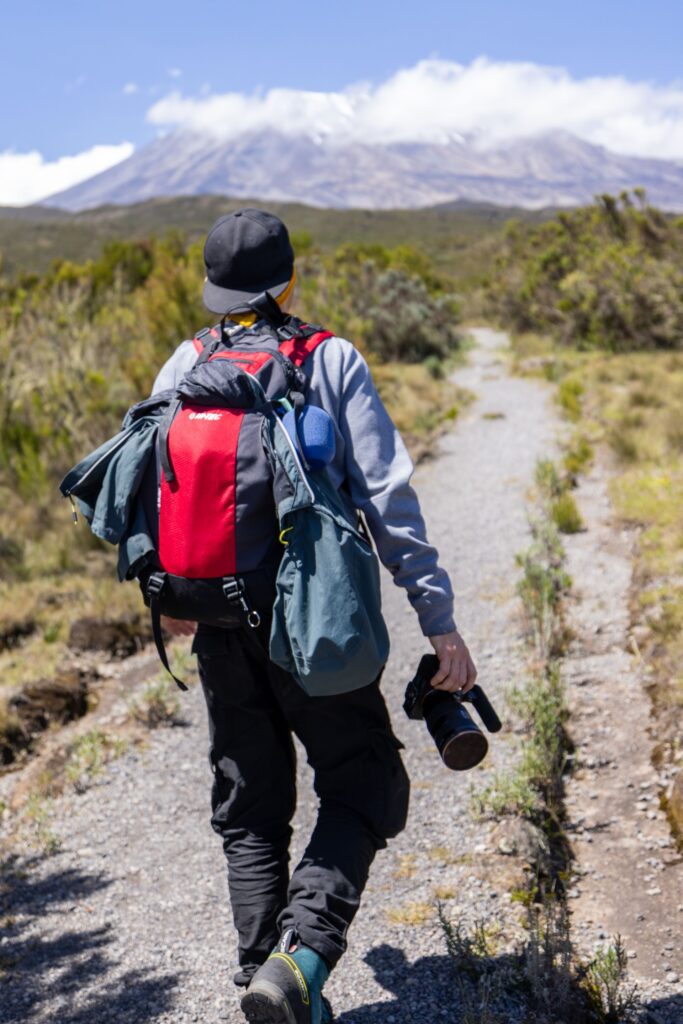
Bring appropriate hiking boots, warm layers, rain protection, gloves, headwear, a daypack, water containers, and other essential equipment.
Altitude
Understand the symptoms of altitude illness and follow your guide’s instructions.
Weather
Kilimanjaro’s conditions can change significantly as elevation increases.
Mental preparation
Summit night can be physically and mentally demanding. A steady pace and patience are important.
Frequently Asked Questions About Kilimanjaro Routes
What are the main Kilimanjaro routes?
The main summit-access routes are Machame, Lemosho, Marangu, Rongai, Umbwe, and the Northern Circuit. TANAPA also identifies Londorosi as an access route in its materials, while Mweka is primarily used for descent.
Which Kilimanjaro route has huts?
Marangu has mountain huts at Mandara, Horombo, and Kibo.
Which Kilimanjaro routes use tents?
Machame, Lemosho, Rongai, Umbwe, and the Northern Circuit use designated tented camps.
How high is Mount Kilimanjaro?
Uhuru Peak is 5,895 meters (19,341 feet) above sea level.
Is Mweka a Kilimanjaro climbing route?
Mweka is primarily a descent route rather than a standard ascent route. It is used for descent by climbers coming down from several southern and western approaches.
How many days does it take to climb Kilimanjaro?
TANAPA states that the climb generally takes 5–8 days depending on the route, with longer itineraries also available.
Do all Kilimanjaro routes reach Uhuru Peak?
The principal summit-access routes are designed to reach the Kibo summit area and Uhuru Peak, subject to weather, health, conditions, and the individual trekker’s ability to complete the ascent.
Is altitude important when choosing a Kilimanjaro route?
Yes. Route duration and acclimatization opportunities are important considerations. TANAPA recommends ascending slowly and choosing itineraries that allow acclimatization.
Final Thoughts: Choosing Your Kilimanjaro Route
Every Kilimanjaro route offers a different way to experience Africa’s highest mountain.
Machame provides a classic southern trekking experience, Lemosho offers a scenic western approach and longer itinerary options, and Marangu stands apart with its mountain huts. Rongai approaches from the north, Umbwe offers a steep and direct ascent, while the Northern Circuit provides an extended journey around Kibo.
The best route for your trip depends on your available time, trekking experience, accommodation preference, desired scenery, budget, and approach to acclimatization.
Whatever route you choose, plan carefully, use a licensed operator, follow your mountain guide’s instructions, and allow sufficient time for your body to adapt to the altitude.
Your Kilimanjaro adventure begins long before summit day—with choosing the route that fits your journey.