Uganda & Rwanda: Primates – The Ultimate East African Primate Safari Guide
Uganda and Rwanda are two of East Africa’s most remarkable destinations for primate encounters. From walking through the ancient forests of Uganda in search of chimpanzees to trekking into the misty mountains of Rwanda to find mountain gorillas, a primate safari in these two countries offers travelers a completely different experience from a traditional savannah safari.
For travelers interested in gorillas, chimpanzees, golden monkeys, colobus monkeys and other forest primates, combining Uganda and Rwanda can create an unforgettable East African adventure.
Uganda is particularly famous for Bwindi Impenetrable National Park, Mgahinga Gorilla National Park and Kibale Forest National Park, while Rwanda is renowned for Volcanoes National Park and Nyungwe National Park.
Whether your dream is to sit quietly near a mountain gorilla family, follow chimpanzees through a rainforest or search for colorful monkeys in the Albertine Rift, Uganda and Rwanda provide exceptional opportunities for close encounters with primates in their natural habitats.
Why Choose Uganda and Rwanda for a Primate Safari?
Uganda and Rwanda are located within the Albertine Rift, one of Africa’s most biologically diverse regions. Their forests and volcanic landscapes provide habitats for numerous primate species.
Uganda’s tourism authorities describe the country as a major primate destination, with Kibale particularly renowned for its concentration of primate species. Gorilla trekking takes place in Bwindi Impenetrable National Park and Mgahinga Gorilla National Park.
Rwanda offers a different but equally fascinating primate experience. Volcanoes National Park is famous for mountain gorillas, while Nyungwe National Park provides opportunities for chimpanzee tracking and encounters with several monkey species.
A combined trip can therefore include:
- Mountain gorilla trekking
- Chimpanzee trekking
- Golden monkey tracking
- Colobus monkey tracking
- L’Hoest’s monkey sightings
- Blue monkey encounters
- Forest hiking
- Canopy experiences
- Birdwatching
- Cultural and community experiences
The result is a safari focused not only on seeing wildlife but also on exploring some of East Africa’s most beautiful forests.
Mountain Gorilla Trekking in Uganda
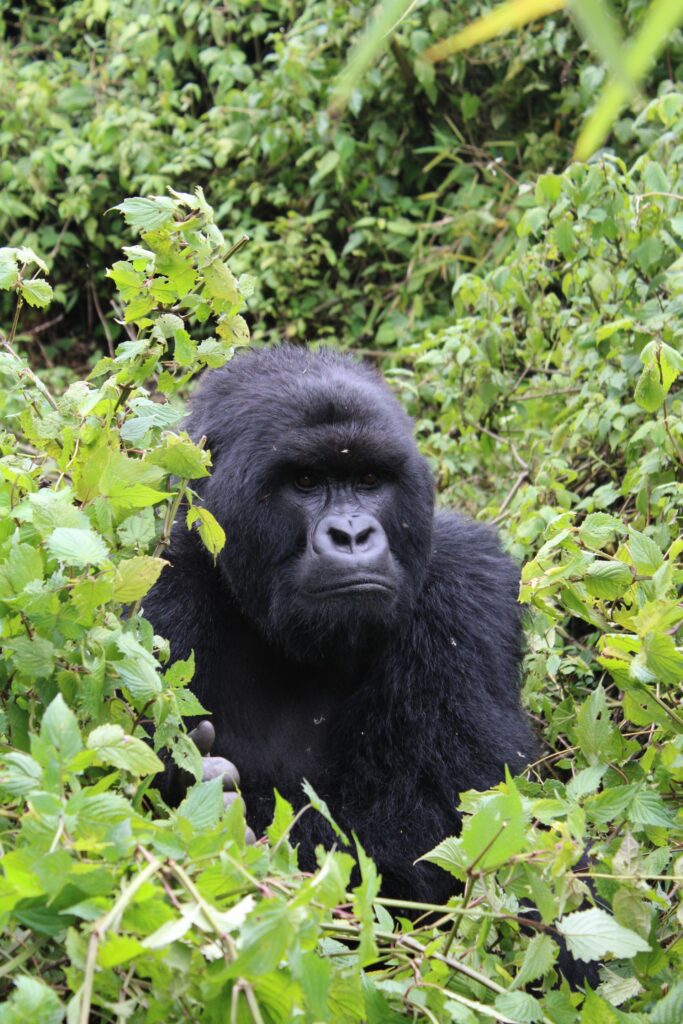
Uganda is home to one of Africa’s most famous wildlife experiences: mountain gorilla trekking.
The main destination is Bwindi Impenetrable National Park, a UNESCO World Heritage Site known for its ancient forest and mountain gorilla population. Gorilla trekking is also available in Mgahinga Gorilla National Park, part of the larger Virunga mountain ecosystem shared by Uganda, Rwanda and the Democratic Republic of Congo.
A typical gorilla trekking day begins early. After a briefing, trekkers enter the forest with trained guides and trackers.
The walk can vary considerably depending on where the gorilla family has moved.
Once the gorillas are located, visitors have a limited period to observe them while following the rules established for responsible wildlife viewing.
The experience is not simply about taking photographs. It is about watching gorillas interact with one another, feeding, resting, grooming and caring for young members of the group.
Why Bwindi Is Special
Bwindi’s dense vegetation gives the experience its name and character.
The forest can be steep, muddy and challenging, but the effort is rewarded by the possibility of encountering mountain gorillas in their natural environment.
The surrounding communities also play an important role in conservation and tourism. Tourism revenue can support employment and community initiatives around protected areas.
Recent conservation work around Bwindi has included community-led efforts to reduce pressure on gorilla habitat and support local livelihoods.
Gorilla Trekking in Rwanda
For many travelers, Rwanda gorilla trekking is the country’s signature wildlife experience.
The activity takes place in Volcanoes National Park, part of the Virunga volcanic ecosystem.
The park’s dramatic volcanic landscape provides a spectacular setting for gorilla trekking.
Instead of searching for wildlife across open savannah, travelers walk through mountain forest, bamboo zones and steep volcanic terrain.
The gorillas may be resting in vegetation, feeding, moving through the forest or interacting with members of their family.
Rwanda’s tourism board highlights Volcanoes National Park as a major destination for mountain gorilla experiences.
Uganda or Rwanda for Gorilla Trekking?
Both countries provide opportunities to see mountain gorillas, but the overall travel experience can be different.
Uganda
Uganda offers:
- Bwindi Impenetrable National Park
- Mgahinga Gorilla National Park
- Mountain gorilla trekking
- Golden monkey tracking
- Chimpanzee trekking
- Larger combinations with traditional wildlife safaris
Uganda can be especially attractive to travelers who want to combine primates with a broader safari itinerary.
Rwanda
Rwanda offers:
- Volcanoes National Park
- Mountain gorilla trekking
- Golden monkey experiences
- Nyungwe chimpanzee tracking
- Forest hiking
- Canopy experiences
- Easy combinations with Kigali
The right choice depends on your itinerary, travel time, budget, preferred activities and the other destinations you want to visit.
Chimpanzee Trekking in Uganda
If mountain gorillas are the stars of the Great Lakes region, chimpanzees are one of Uganda’s biggest attractions for primate enthusiasts.
The country’s leading chimpanzee destination is Kibale Forest National Park.
Uganda’s tourism authority identifies Kibale as a major primate destination and describes it as the country’s “primate capital.” Chimpanzee trekking is one of the park’s principal wildlife experiences.
Chimpanzees are highly active and intelligent animals.
Unlike gorillas, which may spend extended periods in a relatively small area, chimpanzees can move quickly through the forest.
During a trek, you may hear them calling before you see them.
The forest can suddenly become alive with vocalizations, movement in the canopy and branches shaking as chimpanzees travel through the trees.
What Makes Kibale Special?
Kibale’s diverse forest ecosystem supports a remarkable variety of primates.
Depending on your route and conditions, you may encounter:
- Chimpanzees
- Red-tailed monkeys
- Blue monkeys
- L’Hoest’s monkeys
- Olive baboons
- Black-and-white colobus monkeys
- Other forest species
This makes Kibale particularly appealing for travelers who want more than one primate experience.
Chimpanzee Trekking in Rwanda
Rwanda’s principal chimpanzee destination is Nyungwe National Park in the southwest of the country.
Nyungwe is one of the region’s important montane rainforest ecosystems and supports chimpanzees alongside numerous other primates.
Visit Rwanda lists chimpanzees, colobus monkeys, golden monkeys, L’Hoest’s monkeys, blue monkeys, vervets and other species among the country’s primate attractions.
Chimpanzee tracking usually starts early because chimpanzees are active from the beginning of the day.
The experience can involve walking through steep forest terrain while guides and trackers listen for calls and follow signs of the animals’ movement.
Once the chimpanzees are located, visitors observe them from a respectful distance and follow the park’s wildlife-viewing rules.
Nyungwe Forest: A Primate Paradise
Nyungwe deserves special attention because it offers much more than chimpanzee trekking.
The forest supports numerous primate species and provides opportunities for different types of nature experiences.
According to Visit Rwanda, Nyungwe is home to around 13 primate species, including chimpanzees, colobus monkeys, L’Hoest’s monkeys and other forest primates.
Visitors can combine chimpanzee tracking with:
- Colobus monkey tracking
- Forest hiking
- Canopy walkway experiences
- Birdwatching
- Waterfall trails
- Tea experiences
- Community activities
The Nyungwe canopy walkway is another attraction, giving visitors an elevated perspective over the forest canopy.
This makes Nyungwe particularly appealing for travelers who want a broader rainforest experience rather than a single wildlife activity.
Golden Monkey Tracking
Mountain gorillas and chimpanzees are not the only primates worth seeing.
Golden monkey tracking is another popular experience in the Virunga region.
Golden monkeys are striking because of their distinctive golden-orange coloration.
In Uganda, golden monkey tracking is available in Mgahinga Gorilla National Park. In Rwanda, golden monkey experiences take place in Volcanoes National Park.
A golden monkey trek can be an excellent addition to a gorilla-focused itinerary.
Rather than replacing gorilla trekking, it gives travelers another opportunity to explore the volcanic forests and observe a different primate species.
Colobus Monkeys in Rwanda
For travelers interested in monkey species beyond gorillas and chimpanzees, Nyungwe provides particularly interesting opportunities.
One of the highlights is the black-and-white colobus monkey.
Nyungwe’s forest supports large groups of colobus monkeys, and dedicated tracking experiences can provide close views of these striking animals.
The forest is also home to blue monkeys, L’Hoest’s monkeys, mangabeys and other species.
This diversity makes Nyungwe an excellent destination for wildlife photographers and travelers who enjoy observing animal behavior.
Uganda & Rwanda Primate Safari Itinerary
A combined Uganda and Rwanda itinerary can be designed around your available time.
7-Day Primate Safari
A short itinerary could focus on the major highlights.
Day 1: Arrival in Kigali
Day 2: Kigali to Volcanoes National Park
Day 3: Gorilla trekking
Day 4: Golden monkey tracking or cultural experience
Day 5: Travel toward Uganda
Day 6: Bwindi or another primate destination
Day 7: Departure
This is a fast-paced option and requires careful transportation planning.
10-Day Uganda & Rwanda Primate Safari
A longer itinerary allows more time in the forests.
Day 1: Arrival in Kigali
Day 2: Kigali and transfer to Volcanoes National Park
Day 3: Gorilla trekking
Day 4: Golden monkey tracking
Day 5: Travel to Uganda
Day 6: Bwindi experience
Day 7: Transfer toward Kibale
Day 8: Chimpanzee trekking
Day 9: Additional forest or community experience
Day 10: Departure
14-Day Primate and Wildlife Safari
With two weeks, you can combine primates with traditional African wildlife.
A longer itinerary might include:
- Kigali
- Volcanoes National Park
- Gorilla trekking
- Golden monkey tracking
- Bwindi
- Queen Elizabeth National Park
- Kibale Forest
- Chimpanzee trekking
- Wildlife game drives
- Boat safari
This type of itinerary allows travelers to experience both rainforest primates and savannah wildlife.
Combining Primates With a Tanzania Safari
For travelers already planning a Tanzania safari, Uganda and Rwanda can be added to create a broader East African wildlife journey.
For example:
Tanzania → Uganda → Rwanda
A trip could begin with:
- Serengeti
- Ngorongoro Crater
- Tarangire
- Lake Manyara
Then continue to Uganda for:
- Kibale chimpanzees
- Bwindi gorillas
And finish in Rwanda with:
- Volcanoes National Park
- Kigali
- Nyungwe Forest
Another option is to finish with Zanzibar for several days of beach relaxation.
This creates a combination of savannah wildlife, mountain gorillas, chimpanzees, rainforest experiences and Indian Ocean beaches.
Best Time for a Uganda & Rwanda Primate Safari
Primate trekking is possible throughout much of the year, but conditions vary.
The forests receive significant rainfall, and trails can become muddy and slippery.
The drier periods are often preferred by travelers because trekking conditions may be more manageable.
However, rainforest weather is unpredictable.
Even during relatively dry periods, rain can occur.
If you are planning a primate safari, focus on:
- Your preferred travel dates
- Permit availability
- Trekking conditions
- Accommodation availability
- Overall itinerary
- Budget
- Other safari destinations
Rather than choosing dates based only on weather, build flexibility into the itinerary.
What to Pack for a Primate Safari
Forest trekking requires different equipment from a traditional safari.
Consider packing:
Waterproof hiking boots
Trails can be muddy and slippery, particularly after rain.
Lightweight waterproof jacket
Rain can arrive unexpectedly in rainforest environments.
Long trousers
Long trousers provide protection from vegetation, insects and wet conditions.
Long-sleeved shirts
These are useful for protection from insects and branches.
Daypack
Carry water, snacks, a camera, rain protection and other essentials.
Binoculars
Binoculars can be useful when primates are high in the canopy.
Camera
Bring a camera with sufficient battery capacity and memory cards.
Walking poles
These can be helpful on steep or muddy terrain.
Insect repellent
Rainforest environments support numerous insects, so repellent is useful.
Responsible Primate Tourism
Primate tourism should always prioritize animal welfare and conservation.
Travelers should follow instructions from guides and park authorities.
Important principles include:
- Maintain the required distance from animals.
- Never feed wild primates.
- Avoid loud noises.
- Do not attempt to touch animals.
- Follow photography restrictions.
- Avoid visiting when sick according to park rules.
- Do not leave litter in the forest.
- Follow your guide’s instructions.
- Respect local communities and conservation areas.
Responsible tourism helps protect the forests and the wildlife that travelers come to see.
Uganda’s wildlife authority is responsible for managing national parks and issuing permits for activities such as gorilla and chimpanzee tracking.
Uganda & Rwanda Primates: What Makes This Trip Special?
A primate safari is different from a conventional game-drive safari.
You are not simply driving through a national park hoping to spot animals.
You walk into the forest.
You listen.
You follow tracks, calls and movement.
You climb through vegetation.
And then, sometimes after hours of searching, you suddenly find yourself looking at a gorilla family or chimpanzees moving through the trees.
That moment can be incredibly memorable.
Uganda and Rwanda also allow travelers to experience several different ecosystems in one journey.
From the volcanic mountains of the Virunga region to the ancient forests of Bwindi, Kibale and Nyungwe, every destination offers a different perspective on East Africa’s primates.
Frequently Asked Questions
Is Uganda or Rwanda better for primate safaris?
Both countries offer important primate experiences. Uganda combines gorilla trekking with major chimpanzee destinations such as Kibale, while Rwanda combines Volcanoes National Park’s gorillas with chimpanzee and other primate experiences in Nyungwe.
Where can I see gorillas in Uganda?
Mountain gorilla trekking in Uganda takes place in Bwindi Impenetrable National Park and Mgahinga Gorilla National Park.
Where can I see gorillas in Rwanda?
Rwanda’s mountain gorilla trekking takes place in Volcanoes National Park.
Where can I see chimpanzees in Uganda?
Kibale Forest National Park is one of Uganda’s principal destinations for chimpanzee trekking and is renowned for its diversity of primates.
Where can I see chimpanzees in Rwanda?
Nyungwe National Park is Rwanda’s major chimpanzee destination, with chimpanzees living alongside numerous other forest primates.
Can I combine Uganda, Rwanda and Tanzania?
Yes. A multi-country East African itinerary can combine Tanzania’s savannah safari destinations with Uganda and Rwanda’s primate experiences. The itinerary should be designed around flight connections, border arrangements, permits and the time available.
Plan Your Uganda & Rwanda Primate Adventure With Eve On Safari
A Uganda and Rwanda primate safari can be an extraordinary addition to a wider East African adventure.
Whether your priority is mountain gorilla trekking, chimpanzee tracking, golden monkeys, colobus monkeys or a combination of primate experiences, careful planning can make a major difference.
At Eve On Safari, we can help create a personalized East African itinerary that combines wildlife, primates, culture and nature.
You can also combine your Uganda or Rwanda experience with a Tanzania safari and finish your journey with a relaxing Zanzibar beach holiday.
Ready to explore East Africa’s primates? Contact Eve On Safari and start planning your customized Uganda, Rwanda and Tanzania adventure.
Related Eve On Safari Guides
- Tanzania Safari and Zanzibar
- Serengeti Safari
- Ngorongoro Crater Safari
- Northern Tanzania Safari
- Mahale Mountains Chimpanzee Trekking
- Kilimanjaro Trekking
- Zanzibar Honeymoon Guide
- Zanzibar Beach Guide