Serengeti Great Migration: The Ultimate Safari Guide


Introduction
The Serengeti Great Migration is one of the most spectacular wildlife events on Earth. Every year, enormous herds of wildebeest, zebras, and gazelles travel across the Serengeti ecosystem in Tanzania and the Maasai Mara in Kenya in search of fresh grass and water. Their journey creates unforgettable opportunities to witness dramatic river crossings, newborn calves, and predators hunting across the African plains.
For travelers planning a Tanzania safari, experiencing the Great Migration is an extraordinary opportunity to connect with nature and explore one of Africa’s most famous wildlife destinations.
At Eve On Safari, we help travelers plan memorable safari experiences around the migration, choosing suitable destinations, accommodation, and travel dates based on their interests.
What Is the Serengeti Great Migration?
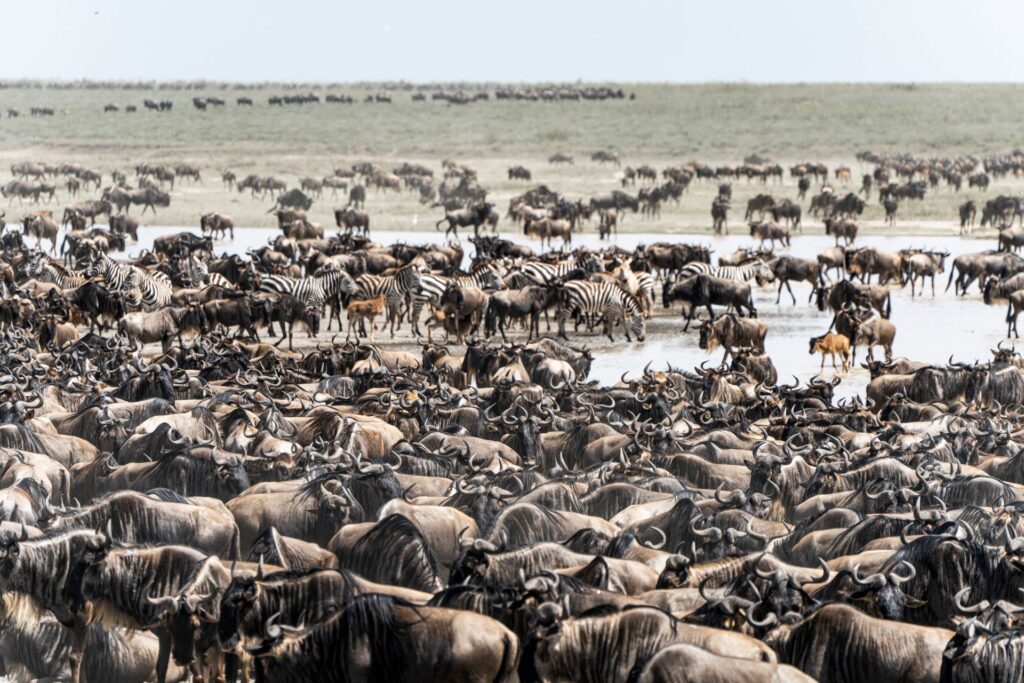
The Serengeti Great Migration is the annual movement of more than a million wildebeest, accompanied by large numbers of zebras and gazelles, across the Serengeti–Mara ecosystem.
The herds follow seasonal rainfall and the growth of fresh grass. Their movement supports the ecosystem by providing food for predators such as lions, cheetahs, leopards, hyenas, and crocodiles.
The migration is not a single event that happens on a fixed date. It is a continuous cycle that changes throughout the year, with different regions offering different wildlife experiences.
When Is the Best Time to See the Serengeti Great Migration?
The best time depends on which part of the migration you want to experience.

January to March: Calving Season
The southern Serengeti and Ndutu plains are important calving areas. Large numbers of wildebeest give birth, attracting predators and creating exceptional wildlife photography opportunities. February is often a particularly rewarding month.

As grazing conditions change, herds move northwest through central and western Serengeti. The Western Corridor and Grumeti region may offer migration sightings and river-crossing opportunities, depending on rainfall.

This is the main planning window for travelers hoping to see Mara River crossings. Herds may gather at the river before crossing, sometimes creating dramatic scenes. However, crossings are unpredictable and cannot be guaranteed.

With the arrival of seasonal rains, many herds begin moving toward central and southern Serengeti. This period can provide beautiful scenery, moving herds, and rewarding game drives.
These periods are approximate because rainfall, grass growth, and local conditions influence the migration each year.
Where to See the Great Migration in Tanzania
Choosing the right safari area is essential for making the most of your trip.
1. Southern Serengeti and Ndutu
The southern plains are particularly famous for calving season. Visitors may see newborn wildebeest, large herds grazing on short grass, and predators following the animals.
This area is an excellent choice for photographers, wildlife enthusiasts, and travelers interested in the relationship between predators and prey.
2. Central Serengeti
Central Serengeti, particularly the Seronera area, offers excellent wildlife viewing throughout the year. Although the migration moves between regions, resident wildlife such as lions, leopards, elephants, and giraffes makes this area a valuable addition to many safari itineraries.
3. Western Serengeti
The Western Corridor is an important migration route, especially around May and June. Depending on the season, travelers may encounter long lines of wildebeest and zebra moving toward the Grumeti River.
4. Northern Serengeti
Northern Serengeti is a popular destination from July to October for travelers hoping to witness the famous Mara River crossings. Areas around Kogatende and Lamai can offer excellent opportunities to follow the herds.
Patience is essential because animals may gather near the river for hours or days before deciding to cross.
What Can You Expect on a Great Migration Safari?
A Serengeti Great Migration safari involves more than watching thousands of animals move across the plains. Every game drive offers a different experience.
-
Large wildlife herds: Observe wildebeest and zebras grazing, moving, and gathering around seasonal water sources.
-
Predator encounters: Look for lions, cheetahs, hyenas, and leopards in areas with abundant prey.
-
River crossings: If conditions align, watch herds attempt to cross rivers while navigating strong currents and crocodile habitats.
-
Calving season: During the appropriate months, see young wildebeest taking their first steps and mothers protecting their calves.
-
Wildlife photography: Capture open landscapes, dramatic skies, animal behavior, and the changing light of the African savannah.
-
Sunrise game drives: Start early when many animals are active and the landscape is illuminated by soft morning light.
Your guide will adjust the daily game-drive plan according to recent wildlife sightings, road conditions, and the location of the herds.
How Much Does a Serengeti Great Migration Safari Cost?
The cost of a Serengeti Great Migration safari varies according to the season, accommodation, length of stay, transport, and number of travelers.
A budget camping safari may cost substantially less than a luxury safari with premium tented camps in northern Serengeti. Peak migration months can also increase accommodation demand and prices, particularly near the Mara River.
Your safari quotation may include:
-
Accommodation and meals.
-
A professional safari guide and vehicle.
-
Park and conservation fees.
-
Airport transfers and other agreed transport.
-
Game drives and planned activities.
International flights, travel insurance, visas, tips, and optional activities may be charged separately. Always confirm the inclusions in your itinerary before booking.
For a tailored quotation, visit Eve On Safari and discuss your preferred travel dates, budget, and accommodation style.
Tips for Planning Your Serengeti Great Migration Safari
Follow these recommendations to improve your safari experience.
-
Choose dates based on your priority. Decide whether calving season, general wildlife viewing, or river crossings matter most.
-
Book early for peak season. Camps in popular migration areas can fill up well in advance.
-
Stay in the right region. The Serengeti is enormous, so accommodation near the relevant herds can reduce unnecessary driving.
-
Allow enough time. A multi-day safari gives you more opportunities to explore different habitats and follow wildlife movements.
-
Pack suitable clothing. Bring lightweight neutral-colored clothing, a warm layer for early mornings, sun protection, and comfortable walking shoes.
-
Remain flexible. The migration follows nature rather than a fixed timetable, so sightings can never be guaranteed.
- Choose responsible safari operators. Follow park regulations, respect wildlife distances, and avoid disturbing animals during river crossings.
Combine the Great Migration With Other Tanzania Destinations
You can make your trip even more rewarding by combining the Serengeti with other destinations in Tanzania’s northern safari circuit.
-
Ngorongoro Crater: Explore a remarkable wildlife destination known for its scenic crater landscape and diverse animals.
-
Tarangire National Park: Discover large elephant herds, baobab trees, and varied savannah habitats.
-
Lake Manyara National Park: Enjoy woodland scenery, birdlife, and opportunities to search for its famous tree-climbing lions.
-
Zanzibar: Finish your adventure with beach relaxation, turquoise waters, and opportunities to explore Stone Town.
A well-designed itinerary balances travel time with wildlife viewing, allowing you to enjoy several destinations without rushing your experience.
Explore our Tanzania safari tours to begin planning your trip.
Frequently Asked Questions About the Serengeti Great Migration
1. What month is best for the Serengeti Great Migration?
January and February are excellent for calving season, while July to October is generally the main period for planning a northern Serengeti safari with potential Mara River crossings.
2. Can I see the Great Migration all year?
Yes. The migration is a year-round cycle, although the herds move between different parts of the Serengeti ecosystem. The best region to visit depends on your travel dates.
3. Are Mara River crossings guaranteed?
No. Crossings depend on herd movements, river conditions, rainfall, and other natural factors. A knowledgeable guide can improve your chances of finding the herds but cannot guarantee a crossing.
4. How many days do I need for a Great Migration safari?
Around four to seven days in the Serengeti can provide a rewarding experience, depending on the area you visit and your wildlife priorities. A longer itinerary can allow more time to follow the migration and explore additional regions.
5. Is the Great Migration suitable for families?
Yes, many families enjoy a migration safari. Choose suitable accommodation, manageable driving distances, and activities appropriate for children’s ages. Check minimum age requirements for camps and optional activities before booking.
6. What animals can I see during the migration?
Wildebeest and zebras are the main migrating animals, accompanied by gazelles. You may also see lions, cheetahs, leopards, hyenas, elephants, giraffes, and numerous bird species.
Plan Your Serengeti Great Migration Safari With Eve On Safari
The Serengeti Great Migration offers an extraordinary opportunity to experience Africa’s wildlife on a grand scale. From the excitement of calving season in the southern plains to the possibility of dramatic river crossings in the north, every season brings a different story.
The key to a successful trip is choosing the right time, staying in the appropriate region, and allowing enough flexibility for nature to shape your experience.
Ready to plan your adventure? Contact Eve On Safari to arrange a personalized Tanzania safari based on your dates, interests, and budget.
Visit Eve On Safari to start planning your Serengeti Great Migration adventure.