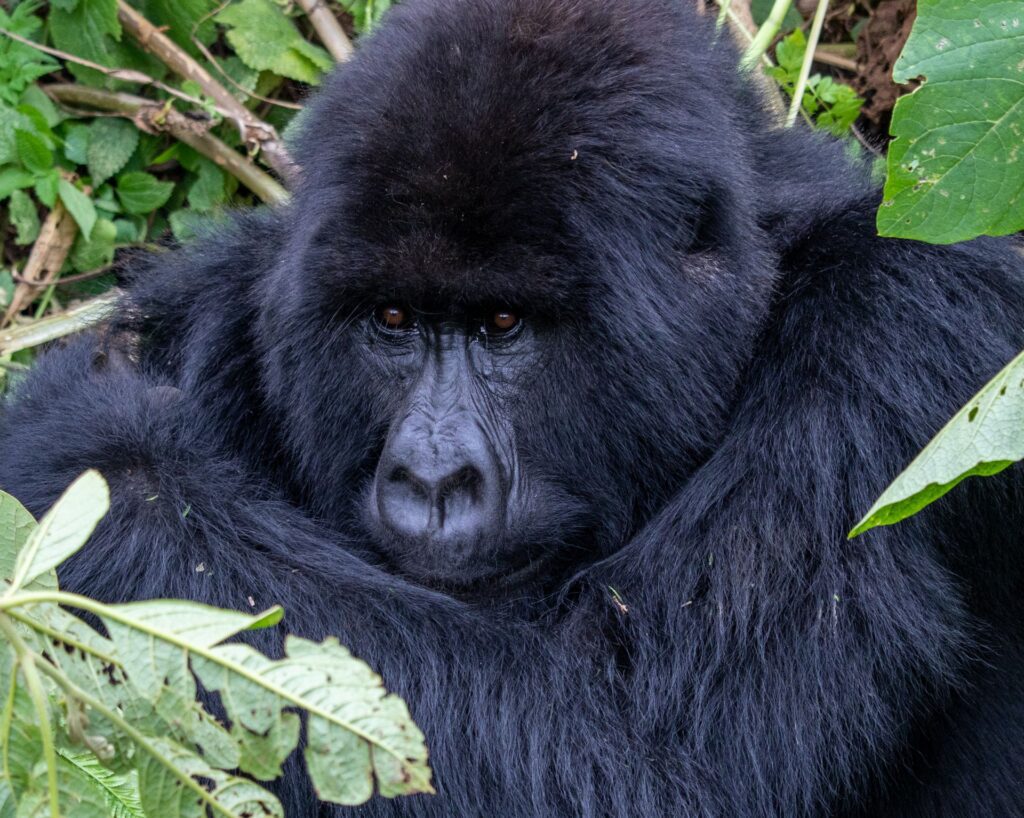
How Fit Do You Need to Be for Gorilla Trekking? A Complete Fitness Guide
Gorilla trekking is one of the most extraordinary wildlife experiences in Africa, but one of the first questions many travelers ask is simple: How fit do you need to be for gorilla trekking?
The honest answer is that you do not need to be an elite athlete, but you should be prepared for a genuine mountain hike.
Gorilla trekking takes place in mountainous rainforest environments where trails can be steep, muddy, slippery and uneven. The distance and difficulty can also vary considerably because gorillas move through the forest and their location changes from day to day.
Uganda Wildlife Authority describes gorilla trekking as requiring moderate fitness, with treks potentially lasting between two and seven hours. In Rwanda’s Volcanoes National Park, official tourism information says hikes can range from around 30 minutes to more than four hours and can reach elevations between approximately 2,500 and 4,000 metres.
The good news is that you can prepare for the experience.
With several weeks of sensible walking, hill training and endurance work, many travelers can improve their ability to handle the trek comfortably.
How Fit Do You Really Need to Be?
You should be comfortable with several hours of walking on uneven terrain, including uphill and downhill sections.
You do not necessarily need to run long distances or spend hours in a gym.
Instead, focus on:
- Walking endurance
- Hill walking
- Stair climbing
- Leg strength
- Balance
- Cardiovascular fitness
- Hiking on uneven ground
- Carrying a small daypack
- Recovering after several hours of activity
Think of gorilla trekking more like a challenging day hike than a normal sightseeing walk.
Your required fitness level will depend on where the gorilla family is located on the day of your trek.
Why Gorilla Trekking Can Be Physically Challenging
Several factors make gorilla trekking different from an ordinary hike.
1. The Terrain Is Steep
Gorilla habitats are mountainous.
In Rwanda, Volcanoes National Park is located in the Virunga volcanic region, where the terrain rises to high elevations.
In Uganda, Bwindi Impenetrable National Park is also characterized by rugged terrain and dense forest.
You may spend part of your trek walking uphill before reaching the gorillas.
The return journey can involve downhill walking, which can be just as demanding on your legs.
2. The Ground Can Be Muddy
Rainforest weather can change quickly.
After rain, trails can become:
- Muddy
- Slippery
- Wet
- Difficult to navigate
This is why sturdy hiking boots are much more appropriate than casual sneakers.
Rwanda’s tourism authority recommends solid walking shoes, sturdy clothing, gaiters and gloves for gorilla tracking.
3. Vegetation Can Slow You Down
You are not walking along a paved trail.
Dense vegetation can include:
- Bushes
- Roots
- Vines
- Bamboo
- Wet grass
- Stinging nettles
Sometimes the guide or tracker needs to help the group move through vegetation.
This can make a relatively short distance take longer than expected.
4. Altitude Matters
Altitude is another factor travelers should consider.
Rwanda’s Volcanoes National Park reaches elevations of approximately 2,500–4,000 metres.
At higher elevations, some people find that they become tired more quickly.
You may notice:
- Faster breathing
- Reduced endurance
- More frequent need for rest
- Headaches
- Shortness of breath during climbs
This does not mean you cannot trek.
It means you should avoid arriving completely unprepared.
How Long Does a Gorilla Trek Take?
There is no single answer.
The duration depends largely on where the assigned gorilla family is located.
Uganda Wildlife Authority says gorilla treks can last approximately 2–7 hours, with one hour allocated for observing a habituated gorilla family once it is found.
In Rwanda, official tourism information says hikes can range from approximately 30 minutes to four or more hours, depending on the gorilla group’s location.
That means you should prepare for a full morning or potentially much of the day.
Do not plan an important activity immediately after your trek unless your itinerary allows plenty of flexibility.
Do You Need to Be Able to Run?
No.
Running is not a requirement for gorilla trekking.
In fact, walking and hiking are usually more useful forms of preparation.
Your training should teach your body to move steadily for a long period rather than sprint for a short distance.
A person who can comfortably hike for several hours may be better prepared than someone who can run a fast 5-kilometre race but rarely walks uphill.
A Simple Gorilla Trekking Fitness Test
Before your trip, try this simple test.
Can you comfortably:
- Walk continuously for 60–90 minutes?
- Walk uphill without stopping repeatedly?
- Climb several flights of stairs?
- Walk for two or three hours with breaks?
- Walk on uneven ground?
- Carry a light daypack?
- Recover reasonably quickly after a long walk?
If the answer is yes, you have a useful fitness foundation.
If you currently struggle with these activities, start training gradually before your trip.
How to Train for Gorilla Trekking
You do not need a complicated training program.
A consistent walking routine can make a major difference.
Weeks 1–2: Build a Walking Habit
Start with approximately 30–45 minutes of walking several times per week.
Include some gentle hills if possible.
Focus on consistency rather than speed.
Weeks 3–4: Increase Your Distance
Increase some walks to approximately 60 minutes.
Add stairs or hill walking once or twice a week.
Start paying attention to how your legs feel after longer walks.
Weeks 5–6: Add Longer Hikes
Try a longer weekend walk or hike.
Aim for approximately 90 minutes to two hours, depending on your current fitness.
Choose terrain that includes hills and uneven surfaces.
Weeks 7–8: Practice Longer Days
If your schedule allows, include a two- to three-hour hike.
You do not need to walk continuously without breaks.
The goal is to become comfortable being on your feet for an extended period.
Before Your Trip
Do not attempt an extremely difficult hike immediately before your departure.
The final days should focus on recovery, light walking and preparation.
You want to arrive rested rather than exhausted.
Strength Training for Gorilla Trekking
Walking is important, but strength training can also help.
Focus on functional lower-body exercises such as:
Squats
Useful for strengthening the thighs and glutes.
Step-Ups
Excellent preparation for climbing hills and stairs.
Lunges
Can help improve leg strength and stability.
Calf Raises
Useful for strengthening the lower legs.
Glute Bridges
Help strengthen the muscles involved in climbing.
Planks
Core strength can help with stability while hiking on uneven terrain.
You do not need extremely heavy weights.
Controlled movements and consistency are more important.
How to Prepare for Steep Hills
Hill training is one of the most useful ways to prepare.
If you live somewhere with hills, use them.
If you live in a flat area, alternatives include:
- Staircases
- Treadmills with incline
- Step machines
- Stadium stairs
- Incline walking
Try to increase the incline or duration gradually.
Do not suddenly double your training volume.
What If You Get Tired During the Trek?
Getting tired does not mean you have failed.
Your guide understands that visitors have different fitness levels.
Walk at a sustainable pace.
Do not try to keep up with the fastest person in the group.
Take appropriate breaks when directed or when necessary.
The objective is not to finish first.
The objective is to enjoy the experience safely.
Can Porters Help?
Yes.
Porters can be extremely useful during gorilla trekking.
In Rwanda, official tourism information states that porters can carry backpacks and cameras and offer assistance along the route.
A porter may help with:
- Carrying your backpack
- Carrying camera equipment
- Assisting on difficult sections
- Providing physical support
- Navigating challenging terrain
Hiring a porter can also provide income to people living around protected areas.
For travelers concerned about fitness, using a porter can make the trek considerably more manageable.
Can You Trek If You Are Over 50?
Being over 50 does not automatically prevent you from gorilla trekking.
Fitness levels vary enormously between individuals.
A healthy, active 60-year-old may be better prepared than a sedentary 30-year-old.
The important questions are:
- Can you walk for several hours?
- Can you manage hills?
- Can you walk on uneven terrain?
- Can you tolerate high elevation?
- Do you have any mobility limitations?
- Have you trained adequately?
If you have concerns about your physical ability, discuss the trek with your doctor and your tour operator before booking.
What About Travelers With Limited Mobility?
This requires more advance planning.
Gorilla trekking involves natural terrain that cannot always be made accessible.
Before booking, discuss your needs with your tour operator.
Ask about:
- Trekking sectors
- Expected terrain
- Trekking distance
- Porter assistance
- Vehicle access
- Available support
- Alternative activities
Do not assume that every trekking sector will provide the same experience.
What Should You Wear?
The right clothing can make a physically demanding trek much more comfortable.
Hiking Boots
Wear sturdy boots with good grip.
Waterproof boots are particularly useful in wet conditions.
Long Trousers
Long trousers protect your legs from vegetation and insects.
Long Sleeves
A long-sleeved shirt offers additional protection.
Gloves
Gardening or hiking gloves can be useful when moving through vegetation.
Gaiters
Gaiters can help keep mud, water and vegetation out of your boots.
Waterproof Jacket
Carry a lightweight waterproof jacket even if the morning looks dry.
Rwanda’s official guidance recommends sturdy clothing, solid walking shoes, gaiters and a lightweight waterproof jacket for gorilla trekking.
What Should You Carry?
Keep your backpack light.
Consider carrying:
- Water
- Snacks
- Rain jacket
- Camera
- Extra batteries
- Phone
- Insect repellent
- Sunscreen
- Tissues
- Hand sanitizer
- Small personal medication kit
If you hire a porter, you can have them carry heavier items.
Does Your Fitness Affect Which Gorilla Group You Visit?
In Rwanda, visitors are allocated to gorilla families according to factors including fitness levels.
This is one reason it is important to be honest about your fitness during the briefing.
Do not exaggerate your abilities simply because you want to reach a particular group.
A suitable assignment can make the experience more enjoyable.
What If You Have Never Hiked Before?
You can still prepare.
Start slowly.
You do not need to become an experienced mountaineer.
Begin with regular walks.
Then introduce:
- Longer walks
- Hills
- Stairs
- Uneven terrain
- Longer weekend hikes
The goal is to gradually teach your body to tolerate sustained activity.
Gorilla Trekking Is Not a Race
This is perhaps the most important fitness tip.
Do not judge your performance against other travelers.
Some people will walk quickly.
Others will need more breaks.
Neither approach determines whether the experience is successful.
Your guides and trackers are there to help manage the group.
Move at a pace that allows you to breathe comfortably and maintain energy.
What Happens When You Find the Gorillas?
The physical challenge becomes much easier to forget once you reach the gorilla family.
You may have spent hours walking through forest.
Then suddenly you see:
- A silverback resting nearby
- A mother caring for her baby
- Young gorillas playing
- A gorilla feeding in the vegetation
- Several members of the family interacting
Standard gorilla tracking provides a limited viewing period.
In Uganda, visitors are allocated one hour with a habituated gorilla family once the group has been located. Rwanda also limits tourist encounters to one hour per gorilla group per day.
That hour can pass remarkably quickly.
How to Conserve Energy During the Trek
Use the following strategies:
Start slowly
Do not use all your energy during the first climb.
Drink water
Stay hydrated throughout the trek.
Eat a light breakfast
Choose food that gives you sustained energy without making you uncomfortable.
Take breaks
Rest when necessary.
Use your trekking poles
They can provide additional stability on difficult terrain.
Hire a porter
Reduce the weight you have to carry.
Follow your guide
Your guide understands the terrain and can help manage your pace.
What About Rain?
Rain is part of the rainforest experience.
It can make the trail considerably more difficult.
Wet ground can become slippery, and vegetation can become heavy with water.
That is why your packing list should include:
- Waterproof jacket
- Waterproof backpack cover
- Dry bags
- Waterproof phone protection
- Gaiters
- Waterproof hiking boots
Do not assume that a sunny morning means you will stay dry all day.
What If You Are Very Fit?
Being fit is an advantage, but do not assume that fitness eliminates every challenge.
Even experienced hikers can find rainforest trekking demanding because of:
- Humidity
- Mud
- Uneven terrain
- Dense vegetation
- Altitude
- Unexpected climbs
Fitness gives you a stronger foundation, but the environment is still different from a gym or ordinary hiking trail.
Gorilla Trekking Fitness: A Practical Preparation Checklist
Before your trip, aim to be able to:
☐ Walk for 90 minutes comfortably
☐ Complete a two- to three-hour hike
☐ Walk uphill
☐ Walk downhill
☐ Climb stairs
☐ Walk on uneven ground
☐ Carry a light backpack
☐ Use hiking boots comfortably
☐ Walk in wet conditions
☐ Take several hours of activity without becoming exhausted
☐ Recover reasonably well after a long hike
You do not need to achieve every item perfectly.
Use the checklist as a guide for identifying areas where you can improve.
How Fit Do You Need to Be for Gorilla Trekking in Uganda?
Uganda Wildlife Authority describes gorilla tracking as requiring moderate fitness and states that treks may last approximately two to seven hours.
Bwindi’s different trekking sectors also mean that the experience can vary.
If fitness is a concern, discuss your preferences with your tour operator before booking.
Uganda also offers chimpanzee trekking and traditional savannah safari experiences, so a wider itinerary can be designed around your interests and physical abilities.
How Fit Do You Need to Be for Gorilla Trekking in Rwanda?
Rwanda’s Volcanoes National Park is mountainous, and trekking conditions can vary considerably.
Official tourism information states that hikes can last from around 30 minutes to four or more hours and reach elevations between approximately 2,500 and 4,000 metres.
Visitors are briefed and allocated to gorilla groups according to factors including fitness levels.
Porters are also available to assist travelers along the route.
Can You Combine Gorilla Trekking With a Tanzania Safari?
Absolutely.
For travelers already planning a Tanzania safari, Uganda or Rwanda can add a completely different dimension to the journey.
A multi-country itinerary could combine:
Tanzania
- Serengeti
- Ngorongoro Crater
- Tarangire
- Lake Manyara
Uganda or Rwanda
- Mountain gorilla trekking
- Chimpanzee trekking
- Golden monkey tracking
- Forest hiking
- Stone Town
- Spice experiences
- Beach relaxation
- Snorkeling
- Diving
This creates a broader East African adventure combining savannah wildlife, rainforest primates and the Indian Ocean.
A Sample Gorilla Trekking Preparation Plan
If you have approximately eight weeks before your trip, try this simple structure.
Weeks 1–2
Walk 30–45 minutes, four times per week.
Add light strength training twice per week.
Weeks 3–4
Walk 45–60 minutes several times per week.
Add hills or stairs.
Weeks 5–6
Include one longer weekend hike of 90 minutes to two hours.
Continue strength training.
Weeks 7–8
Complete one or two longer hikes.
Practice using your actual hiking boots.
Carry the daypack you intend to use.
Then reduce your training shortly before departure so you arrive rested.
Frequently Asked Questions
Do I need to be very fit for gorilla trekking?
No. You do not need to be an athlete, but you should have enough fitness to walk for several hours on uneven and sometimes steep terrain.
How many hours do you walk during gorilla trekking?
It varies. Uganda Wildlife Authority states that gorilla treks can take approximately two to seven hours. Rwanda reports hikes ranging from around 30 minutes to more than four hours, depending on the gorilla family’s location.
Is gorilla trekking harder than a normal safari?
It can be. A traditional safari usually involves sitting in a vehicle, while gorilla trekking requires walking through mountainous forest.
Can I hire a porter?
Yes. Porters are available in gorilla trekking destinations and can carry your belongings and provide assistance on difficult sections.
Can older people go gorilla trekking?
Yes, depending on individual fitness, mobility and health. Age alone does not determine whether someone can complete a trek.
What is the best exercise for gorilla trekking?
Walking, hill walking, stair climbing and longer hikes are among the most practical forms of preparation.
Do I need hiking experience?
No. Previous hiking experience is helpful but not essential. Gradual preparation can improve your confidence and endurance.
What happens if the trek is too difficult?
Tell your guide if you are struggling. Do not push yourself beyond your safe limits. Discuss your fitness level with your tour operator before the trek so appropriate planning can be considered.
Final Thoughts
So, how fit do you need to be for gorilla trekking?
You need enough fitness to handle a challenging forest hike, but you do not need to be a professional hiker.
The most useful preparation is simple:
Walk regularly. Train on hills. Strengthen your legs. Practice on uneven terrain. Wear comfortable hiking boots. Carry only what you need. And give yourself enough time to prepare.
Most importantly, remember that gorilla trekking is not a competition.
You are not trying to finish first.
You are entering a mountain forest in search of one of the world’s most remarkable wild animals.
Take your time, listen to your guides, respect the gorillas and enjoy the journey.
At Eve On Safari, we can help you plan a gorilla trekking adventure in Uganda or Rwanda and combine it with a Tanzania safari, chimpanzee trekking, Kilimanjaro or a relaxing Zanzibar holiday.
Start planning your East African primate adventure with Eve On Safari.