Lake Manyara: The Tree-Climbing Lions and Flamingo Flocks
Lake Manyara National Park is one of Tanzania’s most fascinating safari destinations, offering an extraordinary combination of wildlife, forests, wetlands, open plains and an alkaline lake. Despite being much smaller than the Serengeti, the park packs remarkable ecological diversity into a relatively compact area.
Lake Manyara is especially famous for two unforgettable attractions: tree-climbing lions and large seasonal gatherings of flamingos. TANAPA describes the park as a home of tree-climbing lions, while its alkaline lake supports lesser and greater flamingos along with many other waterbirds.
For travelers exploring Tanzania’s Northern Safari Circuit, Lake Manyara can be an excellent addition to an itinerary that also includes Tarangire National Park, Ngorongoro Crater and Serengeti National Park.
Where Is Lake Manyara National Park?
Lake Manyara National Park lies at the base of the Great Rift Valley Escarpment in northern Tanzania. The park is positioned along the Northern Safari Circuit, making it a convenient destination to include before or after visiting Ngorongoro and the Serengeti.
The dramatic Rift Valley escarpment provides a spectacular backdrop to the lake, while the park itself contains a mixture of groundwater forest, acacia woodland, open floodplain, wetlands and the alkaline lake.
The contrast between lush forest, open grassland, the shimmering lake and steep escarpment makes Lake Manyara particularly scenic.
Why Is Lake Manyara Famous?
Lake Manyara is best known for its unusual combination of wildlife and landscapes.
The park’s signature attractions include:
- Tree-climbing lions
- Seasonal flamingo flocks
- Large-tusked elephants
- Giraffes
- Zebras
- Buffalo
- Hippos
- Baboons and blue monkeys
- More than 400 recorded bird species
- Lush groundwater forests
- Great Rift Valley scenery
TANAPA records more than 400 bird species in the park, including flamingos, pelicans, storks, herons, fish eagles and other waterbirds.
The Famous Tree-Climbing Lions of Lake Manyara
One of the biggest reasons travelers visit Lake Manyara is the opportunity to see lions resting in trees.
Lions are generally associated with open grasslands, but some lions in Lake Manyara are known for climbing into trees and resting on broad branches.
Seeing a lion lying several metres above the ground creates an extraordinary safari experience and an unforgettable photography opportunity.
TANAPA specifically identifies tree-climbing lions as one of Lake Manyara National Park’s defining attractions.
Why Do Lions Climb Trees?
There is no single confirmed explanation for why lions climb trees.
Possible explanations include seeking relief from insects, escaping heat at ground level, enjoying cooler air or simply finding a comfortable resting place.
TANAPA’s own historical material notes that lions may use lower tree branches to get away from flies.
Whatever the reason, watching a lion stretched across a tree branch is one of the distinctive wildlife experiences Lake Manyara can offer.
However, wildlife sightings are never guaranteed. Your safari guide will search areas where lions are known to occur and follow current wildlife activity.
Lake Manyara’s Flamingo Flocks
The other spectacular attraction is the lake itself.
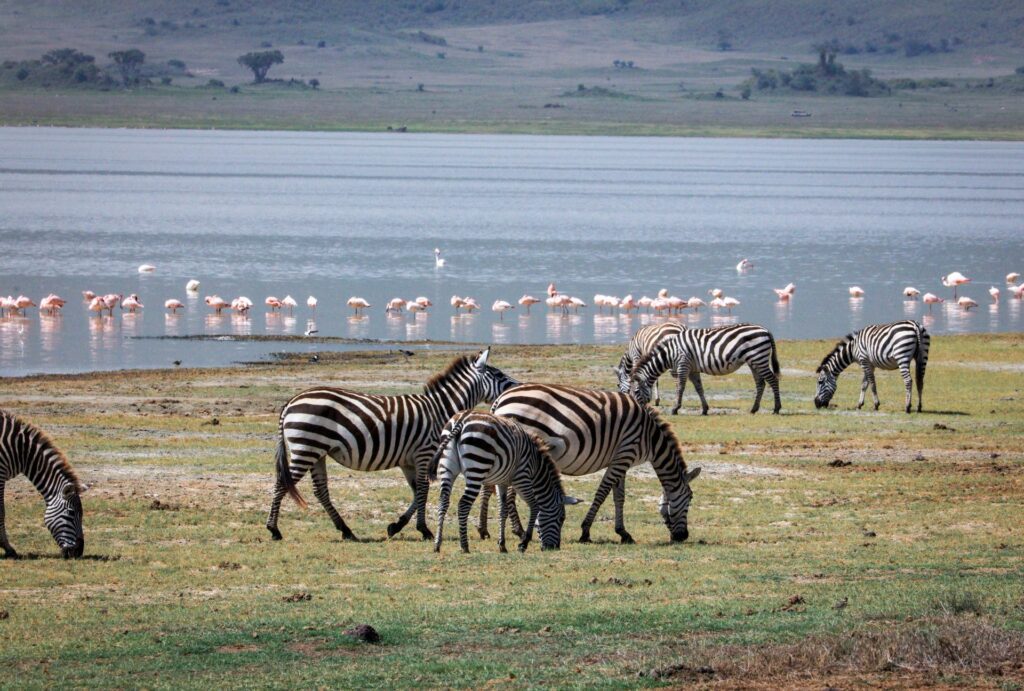
Lake Manyara is an alkaline soda lake that provides important habitat for flamingos and other waterbirds. Depending on water conditions and season, visitors may see large gatherings of lesser and greater flamingos around the lake.
When flamingos gather along the shoreline, their pink coloration creates a dramatic contrast with the blue-grey water, surrounding vegetation and Rift Valley escarpment.
For photographers and birdwatchers, this can be one of the most memorable scenes of a Lake Manyara safari.
What Other Birds Can You See?
Lake Manyara is not only about flamingos.
The park’s different habitats support a wide range of birdlife, including:
- Pelicans
- Storks
- Herons
- Fish eagles
- Spoonbills
- Bee-eaters
- Hornbills
- Turacos
- Migratory birds
The combination of forest, wetland, woodland and lake habitat makes Manyara particularly interesting for birdwatchers.
Wildlife You Can See at Lake Manyara
Although tree-climbing lions and flamingos are the park’s signature attractions, Manyara supports a much broader range of wildlife.
During a game drive, you may encounter:
Elephants
Lake Manyara is known for elephants, including individuals with impressive tusks.
Giraffes
Giraffes can often be seen browsing in woodland and open areas.
Buffalo
Large buffalo can be encountered around the floodplain and grassland areas.
Zebras and Wildebeest
Open areas provide habitat for plains game, including zebra and wildebeest.
Hippos
Hippos inhabit pools and wetland areas around the lake. Visitors should always follow guide and park safety instructions around these powerful animals.
Primates
The groundwater forest provides habitat for blue monkeys and baboons, adding another dimension to a Manyara wildlife experience.
The Diverse Landscapes of Lake Manyara
One of the things that makes Lake Manyara special is how quickly the landscape can change during a game drive.
Groundwater Forest
Near the park entrance, groundwater springs support lush evergreen forest. The vegetation provides habitat for monkeys, birds and other forest species.
Acacia Woodland
The woodland provides important habitat for giraffes, elephants and the park’s famous tree-climbing lions.
Open Floodplain
The floodplain offers more open views and opportunities to see larger mammals moving through the grasslands.
Alkaline Lake
The lake attracts flamingos and numerous other waterbirds, creating one of the park’s most recognizable scenes.
Great Rift Valley Escarpment
Towering cliffs rise above the park and provide a dramatic backdrop throughout the safari.
Best Things to Do in Lake Manyara National Park
A Lake Manyara safari can include several activities depending on the itinerary and current park regulations.
1. Game Drives
Game drives are the main safari activity and provide opportunities to search for elephants, lions, giraffes, buffalo, zebras and other wildlife.
2. Bird Watching
With more than 400 recorded bird species, Manyara is an excellent destination for bird enthusiasts.
3. Canopy Walk
The park offers a canopy walkway with viewing platforms among the trees, providing a different perspective of the forest ecosystem.
4. Scenic Viewing
The Rift Valley escarpment, lake and diverse habitats provide excellent opportunities for landscape photography.
5. Cultural Experiences
Travelers can also combine their safari with cultural experiences around Mto wa Mbu, depending on their itinerary.
When Is the Best Time to Visit Lake Manyara?
Lake Manyara can be visited throughout the year, but the experience can vary depending on rainfall, water levels, vegetation and wildlife conditions.
For general wildlife viewing, many travelers prefer periods when vegetation is less dense and animals are easier to observe.
For birdwatching, wet periods can provide excellent opportunities because the lake and wetlands attract waterbirds, including flamingos.
It is important to remember that flamingo numbers and distribution are seasonal and can change with water conditions. TANAPA describes flamingos at Manyara as a seasonal attraction.
If your main goal is to see tree-climbing lions, sightings are also dependent on wildlife movements and cannot be guaranteed on a particular day.
How Many Days Do You Need in Lake Manyara?
Manyara can work well as a day safari or as part of a longer Northern Tanzania itinerary.
Because of its location, travelers often combine it with:
- Tarangire National Park
- Ngorongoro Crater
- Serengeti National Park
- Arusha
- Mto wa Mbu cultural experiences
A one-day visit can provide a taste of the park’s wildlife and landscapes, while an overnight stay allows more time to explore and enjoy the surroundings.
The best length depends on your overall safari route, interests and available travel time.
Lake Manyara vs Serengeti: Which Should You Visit?
Lake Manyara and Serengeti offer very different safari experiences.
Lake Manyara is compact and known for its diverse habitats, tree-climbing lions, elephants, birdlife and flamingos.
Serengeti National Park is much larger and is famous for its expansive plains, abundant wildlife and the Great Migration.
Rather than viewing them as competing destinations, many travelers can combine both parks in one Northern Tanzania safari.
A route that includes Tarangire, Lake Manyara, Ngorongoro and Serengeti can provide a broad introduction to Tanzania’s wildlife and landscapes.
Why Visit Lake Manyara with Eve On Safari?
A safari is more than simply visiting a national park. It is about creating an itinerary that fits your interests, travel dates and preferred style of adventure.
With Eve On Safari, you can plan a private or tailor-made Tanzania safari that includes Lake Manyara alongside other Northern Circuit destinations.
Whether you are interested in:
- Big cats
- Elephants
- Flamingos
- Wildlife photography
- Birdwatching
- Forest experiences
- Northern Tanzania safaris
- Family safari adventures
your itinerary can be planned around the experiences you want to discover.
Frequently Asked Questions About Lake Manyara
Are there really tree-climbing lions in Lake Manyara?
Yes. Lake Manyara is renowned for lions that climb and rest in trees. TANAPA identifies tree-climbing lions as one of the park’s major attractions.
Why do lions climb trees in Lake Manyara?
The exact reason is not definitively established. Possible explanations include escaping insects, seeking cooler air and finding comfortable resting places in trees.
Can I see flamingos at Lake Manyara?
Yes. Lake Manyara’s alkaline lake provides habitat for lesser and greater flamingos. Their numbers and distribution are seasonal and depend on environmental conditions.
What other animals live in Lake Manyara?
Visitors may see elephants, buffalo, giraffes, zebras, wildebeest, hippos, lions and numerous other species. The groundwater forest also supports blue monkeys and baboons.
Is Lake Manyara worth visiting on a Tanzania safari?
Lake Manyara offers a distinctive combination of tree-climbing lions, flamingos, elephants, birdlife, forest, lake scenery and the Great Rift Valley escarpment. It can also be conveniently combined with other Northern Tanzania destinations.
How long should I spend in Lake Manyara?
Many travelers visit as a day trip, while others include an overnight stay. The ideal duration depends on your overall Northern Tanzania safari itinerary and whether your priority is wildlife, birdwatching, photography or a broader cultural and nature experience.
Plan Your Lake Manyara Safari
From a lion resting high in an acacia tree to thousands of flamingos gathering around the alkaline lake, Lake Manyara National Park offers wildlife experiences that are very different from those found elsewhere in Tanzania.
Its combination of forest, wetlands, woodland, open plains and dramatic Rift Valley scenery makes it a fascinating addition to a Northern Tanzania safari.
Ready to explore Lake Manyara?
Plan your Tanzania safari with Eve On Safari and combine Lake Manyara with Tarangire, Ngorongoro Crater and Serengeti National Park for an unforgettable Northern Circuit adventure.
🌍 Eve On Safari — Your Tanzania Safari Adventure Starts Here.