Ngorongoro Crater: Why It’s Called Africa’s Eden
Few places in Africa combine wildlife, scenery, culture, and geological history as dramatically as the Ngorongoro Crater in northern Tanzania.
Often described as “Africa’s Eden,” the crater is one of Tanzania’s most extraordinary safari destinations. Its steep walls surround a vast natural enclosure where grasslands, forests, wetlands, and a soda lake provide habitat for an impressive variety of wildlife.
A visit to Ngorongoro is more than a traditional game drive. It is an opportunity to experience an ancient volcanic landscape, observe wildlife at close range, and learn about the people and communities connected to the surrounding conservation area.
So, why is Ngorongoro Crater called Africa’s Eden?
What Is Ngorongoro Crater?
Ngorongoro Crater is a large volcanic caldera within the in northern Tanzania.
The crater formed when a massive volcano collapsed after a major eruption millions of years ago. Today, the caldera forms a roughly enclosed ecosystem surrounded by steep walls.
The crater floor covers approximately 260 square kilometres and contains a remarkable combination of open grassland, woodland, wetlands, and Lake Magadi, a shallow alkaline lake.
Its natural boundaries help support a high concentration of wildlife throughout the year.
Why Is Ngorongoro Called Africa’s Eden?
The nickname “Africa’s Eden” comes from the combination of abundant wildlife, fertile habitats, permanent water sources, dramatic scenery, and relative isolation found within the crater.
Unlike some wildlife areas where animals migrate over huge distances, many species living in the crater can find food and water within the caldera.
This makes Ngorongoro particularly attractive for travelers hoping to see a variety of African wildlife during a relatively short safari.
1. An Extraordinary Concentration of Wildlife
One of Ngorongoro’s greatest attractions is the concentration of animals living on and around the crater floor.
Visitors may encounter:
-
African elephants
-
Lions
-
Buffalo
-
Hippos
-
Zebras
-
Wildebeest
-
Thomson’s gazelles
-
Grant’s gazelles
-
Warthogs
-
Hyenas
-
Jackals
-
Ostriches
-
Flamingos and other waterbirds
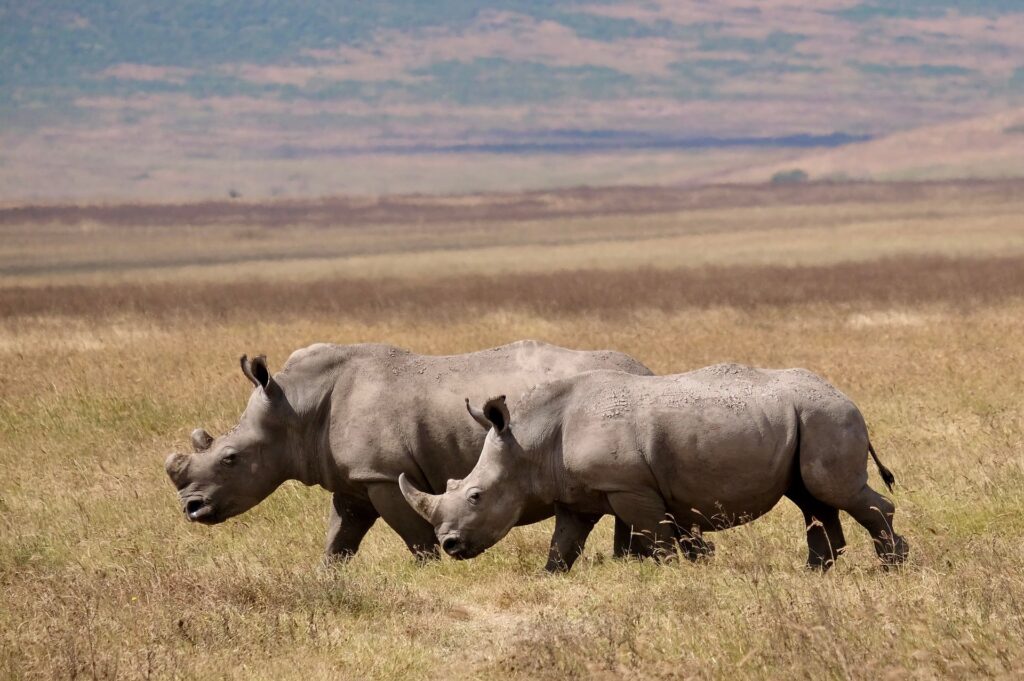
The crater is also one of the places in Tanzania where travelers have a reasonable opportunity to search for the critically endangered black rhinoceros.
Wildlife sightings can never be guaranteed, however. Animals are wild, and their locations change according to food, water, weather, and other environmental conditions.
2. A Natural Wildlife Enclosure
One of the features that makes Ngorongoro unusual is its geography.
The crater walls create a natural boundary around the floor. Water and food resources within the caldera help sustain wildlife, particularly during the dry season.
This doesn’t mean that animals are literally trapped inside the crater. Many species move between the crater and surrounding habitats.
Nevertheless, the enclosed landscape creates a safari experience that feels very different from the open plains of the Serengeti.
From the crater rim, visitors can look down into an enormous natural amphitheater filled with grasslands, forests, animals, and wetlands.
3. The Big Five Experience
Ngorongoro is particularly famous among travelers interested in seeing Africa’s Big Five:
-
Lion
-
Leopard
-
Elephant
-
Buffalo
-
Rhinoceros
Lions and buffalo are frequently encountered in suitable habitats, while black rhinoceros are among the most prized sightings.
Leopards are more elusive and can be difficult to spot.
Elephants are often associated with the crater’s surrounding forests and highland areas rather than being guaranteed sightings on every crater-floor drive.
The Big Five should therefore be viewed as a possibility rather than a checklist.
4. The Landscape Is Spectacular
Wildlife is only half of Ngorongoro’s appeal.
The crater itself is an extraordinary geological landscape.
Standing on the rim, you can see the crater floor stretching below you, bordered by steep volcanic walls. The landscape changes color and character with the seasons.
During greener months, the grasslands can appear lush and vibrant. In drier periods, golden grasses dominate the plains.
Mist frequently gathers around the crater rim in the early morning, adding another layer to the scenery.
This combination of volcanic walls, open plains, forests, wetlands, and wildlife helps explain why travelers have compared Ngorongoro to an African garden or Eden.
5. Lake Magadi and the Flamingos
One of the most recognizable features on the crater floor is Lake Magadi, a shallow alkaline lake.
Depending on water levels and conditions, the lake can attract large numbers of waterbirds, including flamingos.
The presence of flamingos against the backdrop of the crater walls creates some of the most memorable photographic scenes in the region.
Birdlife extends well beyond flamingos. More than a variety of resident and migratory species can be encountered throughout the conservation area.
Birdwatchers should therefore consider Ngorongoro more than simply a destination for large mammals.
6. Ngorongoro’s Ancient Volcanic History
The story of Ngorongoro begins long before modern safari tourism.
The region is part of the East African Rift, an area shaped by enormous geological forces.
The original volcano was much larger than the crater visitors see today. After volcanic activity and collapse, the present caldera was formed.
Over time, vegetation, water, and wildlife transformed the geological depression into the diverse ecosystem seen today.
The result is a place where geological history and living ecosystems exist side by side.
7. The Ngorongoro Highlands
Ngorongoro is not simply a crater.
The wider Ngorongoro Conservation Area encompasses highlands, forests, grasslands, archaeological sites, and important wildlife habitats.
The landscape around the crater includes volcanic peaks, montane forests, rolling grasslands, and dramatic valleys.
This larger conservation area is important because wildlife does not recognize the boundaries shown on a tourist map.
Seasonal movements connect Ngorongoro with neighboring ecosystems, including the Serengeti.
8. Maasai Culture and Ngorongoro
The Ngorongoro Conservation Area is also home to Maasai communities.
Traditional pastoralist communities have lived in and around the region for generations, raising livestock and maintaining cultural traditions closely connected to the landscape.
This creates an important distinction between Ngorongoro and a conventional national park.
The conservation area was established with a broader approach intended to accommodate wildlife conservation alongside human habitation and pastoralism.
Visitors may have opportunities to learn about Maasai culture through appropriately organized community visits and cultural experiences.
These experiences should be approached respectfully, with attention to local customs and community-led tourism practices.
9. A Place Where Wildlife and People Share the Landscape
One of Ngorongoro’s most interesting characteristics is the coexistence of conservation and human communities.
The area demonstrates that wildlife conservation does not always happen in landscapes without people.
Pastoral communities, wildlife, tourism, archaeological resources, and conservation interests all intersect within the broader conservation area.
This makes Ngorongoro more complex than a simple safari destination.
It is simultaneously a wildlife refuge, geological landmark, cultural landscape, archaeological region, and tourism destination.
10. Olduvai Gorge and Human History
The wider conservation area is also associated with some of the world’s most important archaeological discoveries.
Olduvai Gorge, sometimes referred to as the “Cradle of Mankind,” has produced significant fossil and archaeological evidence relating to human evolution.
Researchers have discovered important hominin fossils and stone tools in the area.
For travelers interested in archaeology and human origins, this adds another dimension to a Ngorongoro safari.
A trip here can therefore connect three enormous stories:
volcanic history + wildlife evolution + human evolution.
When Is the Best Time to Visit Ngorongoro Crater?
Ngorongoro can be visited throughout the year, but different seasons offer different experiences.
Dry Season
The drier months generally provide good wildlife-viewing conditions.
Vegetation becomes less dense, and animals may concentrate around reliable water sources.
However, this is also a popular period for tourism, so some areas can become busy.
Green Season
The wetter months bring greener landscapes and can be particularly rewarding for photographers and birdwatchers.
The scenery can be spectacular after rainfall, and there are periods when visitor numbers are lower.
Travelers should remember that weather patterns can vary from year to year.
How to Get to Ngorongoro Crater
Most visitors reach Ngorongoro as part of a northern Tanzania safari circuit.
A typical itinerary may combine:
-
Arusha
-
Tarangire National Park
-
Lake Manyara
-
Ngorongoro Conservation Area
-
Serengeti National Park
The exact order depends on the safari operator and travel schedule.
Ngorongoro is also accessible by air through nearby safari airstrips, followed by a transfer to the crater area.
For most international visitors, flying into Kilimanjaro International Airport or traveling from Arusha forms part of the wider journey.
How Long Should You Spend in Ngorongoro?
Many safari itineraries allocate one night around the crater and a crater-floor game drive the following day.
However, the ideal length depends on what you want to experience.
A short visit can focus on:
-
Crater-floor wildlife viewing
-
Scenic viewpoints
-
Accommodation around the crater rim
A longer stay can allow time for:
-
Cultural experiences
-
Olduvai Gorge
-
Highland walks
-
Additional wildlife activities
-
Exploring other parts of the conservation area
If your primary goal is wildlife viewing, the crater floor can provide an intense safari experience within a relatively limited area.
What Makes Ngorongoro Different From Serengeti?
Ngorongoro and Serengeti are often combined because they offer contrasting safari experiences.
The Serengeti is famous for its vast open plains, large-scale wildlife movements, and the annual wildebeest migration.
Ngorongoro offers a more enclosed volcanic landscape with steep crater walls and a high concentration of wildlife.
In simple terms:
Serengeti = endless plains and migration
Ngorongoro = volcanic caldera and concentrated wildlife
Visiting both gives travelers a broader perspective on northern Tanzania’s ecosystems.
Is Ngorongoro Crater Worth Visiting?
For travelers interested in wildlife, landscapes, geology, culture, or human history, Ngorongoro offers several experiences within one destination.
Its appeal comes from the combination rather than a single attraction.
You can descend into an ancient volcanic caldera in the morning, watch lions on the grasslands, see flamingos around an alkaline lake, and later explore a region connected to major discoveries in human evolution.
That unusual combination is why the nickname “Africa’s Eden” has become associated with Ngorongoro.
Tips for Visiting Ngorongoro Crater
Start early
Early morning game drives can provide excellent opportunities for wildlife viewing and photography.
Bring warm clothing
The crater rim is considerably cooler than many lower-altitude safari destinations, particularly in the early morning.
Carry binoculars
Binoculars are useful for spotting distant animals and birds.
Protect your camera equipment
Dust can be an issue on some safari roads. A protective camera bag or dust cover is useful.
Follow park regulations
Remain inside your safari vehicle unless you are in an approved area where getting out is permitted.
Never feed animals or attempt to approach wildlife.
Allow time for the drive
The journey between destinations is part of the safari experience. Build enough time into your itinerary rather than trying to rush through multiple parks.
Frequently Asked Questions About Ngorongoro Crater
Why is Ngorongoro Crater called Africa’s Eden?
Ngorongoro is often called Africa’s Eden because of its combination of abundant wildlife, permanent and seasonal water sources, fertile habitats, dramatic scenery, and natural volcanic enclosure.
What animals can you see in Ngorongoro Crater?
Commonly encountered wildlife includes lions, buffalo, zebras, wildebeest, hippos, hyenas, gazelles, elephants and numerous bird species. The crater is also an important habitat for black rhinoceros.
Can you see the Big Five in Ngorongoro?
Ngorongoro provides opportunities to see several of the Big Five, including lion, buffalo, elephant and rhinoceros. Leopards are present but are considerably more difficult to spot.
Is Ngorongoro Crater a volcano?
Ngorongoro is a volcanic caldera formed following the collapse of a large volcano. It is not simply a conventional volcanic crater.
Is Ngorongoro Crater part of the Serengeti?
No. Ngorongoro Conservation Area is a separate protected area from Serengeti National Park. However, the ecosystems are geographically connected and are commonly visited together on northern Tanzania safari itineraries.
Can you stay inside Ngorongoro Crater?
Most accommodation is located around the crater rim or elsewhere within the wider conservation area rather than on the crater floor itself. Your safari operator can recommend accommodation based on your budget and itinerary.
What is the best time to visit Ngorongoro Crater?
Ngorongoro can be visited year-round. Dry periods can offer favorable wildlife-viewing conditions, while greener months can provide lush scenery and excellent birdwatching opportunities.
Final Thoughts: Discovering Africa’s Eden
The Ngorongoro Crater is much more than a spectacular safari viewpoint.
It is a place where an ancient volcanic landscape has become home to an extraordinary concentration of wildlife. Around it lies a much larger conservation area containing forests, grasslands, archaeological sites, cultural landscapes, and communities.
That combination gives Ngorongoro its unique character.
Whether you visit for the wildlife, the scenery, Maasai culture, geological history, or the story of human evolution, a journey into Ngorongoro offers an experience that goes beyond a traditional game drive.
And when you stand on the crater rim at sunrise, looking across the vast caldera below, it becomes easy to understand why this remarkable corner of Tanzania is often described as Africa’s Eden.