Olduvai Gorge: Walking Through the Cradle of Mankind
Tanzania is famous for its incredible wildlife, but its importance goes far beyond lions, elephants and the Great Migration. Deep within the Ngorongoro Conservation Area lies one of the world’s most important archaeological sites: Olduvai Gorge.
Often referred to as the “Cradle of Mankind,” Olduvai Gorge has played a major role in the study of human evolution. Archaeological discoveries from the area have provided scientists with important evidence about early hominins, ancient environments and the development of stone-tool technology.
For travelers exploring Northern Tanzania, visiting Olduvai Gorge offers the opportunity to connect a classic safari with a fascinating journey into humanity’s distant past.
Where Is Olduvai Gorge?
Olduvai Gorge is located in northern Tanzania within the Ngorongoro Conservation Area, between the Serengeti Plains and the Ngorongoro Crater.
The gorge forms part of the spectacular East African Rift landscape. Its exposed geological layers have helped researchers study different periods of human and environmental history.
Because of its location, Olduvai Gorge is commonly included in Northern Tanzania safari itineraries that visit Ngorongoro Crater and Serengeti National Park.
Why Is Olduvai Gorge Called the Cradle of Mankind?
The nickname “Cradle of Mankind” reflects the extraordinary archaeological discoveries made in the area.
Research at Olduvai Gorge has uncovered fossils of early hominins, stone tools and animal remains preserved in ancient geological layers.
Among the most important researchers associated with Olduvai are Louis Leakey, Mary Leakey and their colleagues, whose discoveries helped establish the site’s global significance.
Mary Leakey’s discovery of early hominin remains and ancient stone tools at Olduvai helped transform scientific understanding of human evolution.
The site does not represent a single moment in human history. Instead, its geological layers preserve evidence from different periods, allowing researchers to examine how hominins and their environments changed over time.
What Was Discovered at Olduvai Gorge?
Olduvai Gorge has produced a remarkable collection of archaeological and paleontological evidence.
Visitors can learn about discoveries involving:
- Early hominin fossils
- Ancient stone tools
- Fossilized animal remains
- Ancient geological deposits
- Evidence of past environments
- Human evolutionary history
One of the best-known discoveries associated with Olduvai is Paranthropus boisei, an early hominin species whose remains were discovered by Mary Leakey in 1959.
The gorge has also produced important evidence associated with Homo habilis, a species frequently discussed in connection with early stone-tool technology.
Mary Leakey and the History of Olduvai Gorge
Olduvai Gorge’s story is closely connected with the work of Mary Leakey.
During decades of research in East Africa, Mary Leakey and her team uncovered fossils and stone tools that became important evidence in the study of early humans.
Her discoveries helped demonstrate that the Olduvai region had been occupied by early hominins over a very long period.
Today, visitors can learn about the work of the Leakeys and other researchers through exhibits and interpretation at the archaeological site.
What Can You See at Olduvai Gorge?
A visit to Olduvai is different from a traditional wildlife game drive.
Instead of spending the entire experience searching for animals, visitors explore a landscape that tells the story of ancient environments and human evolution.
The Gorge
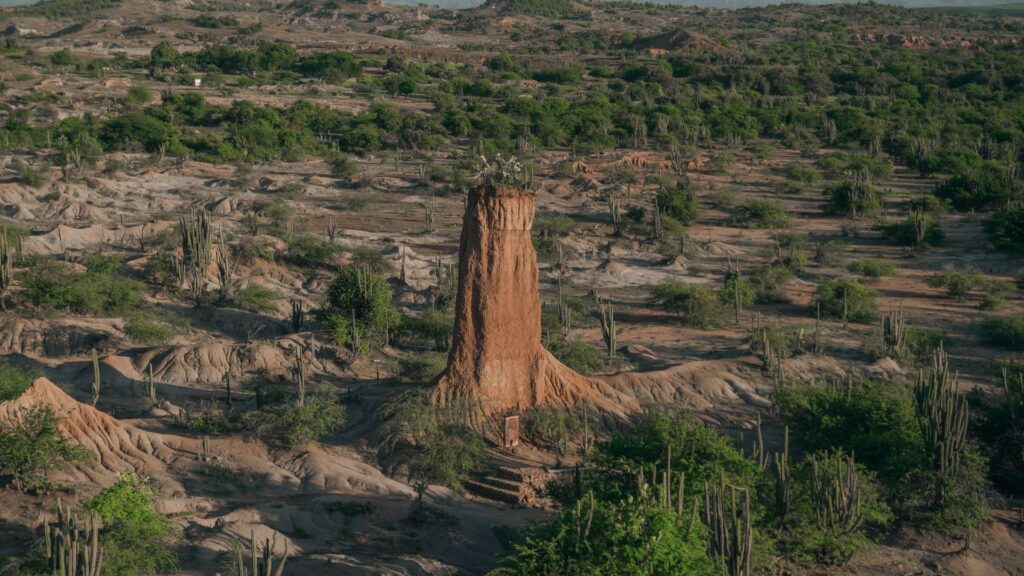
The exposed layers of the gorge provide an impressive view of the geological history of the area.
Archaeological Discoveries
Displays and interpretation explain the stone tools, fossils and other discoveries made at the site.
Fossil Evidence
The area has produced fossil remains of early hominins and animals that help researchers reconstruct ancient ecosystems.
Museum & Interpretation
Visitors can learn about archaeological discoveries, researchers and the significance of Olduvai Gorge through museum displays and educational interpretation.
Olduvai Gorge Museum
The Olduvai Gorge Museum provides visitors with an opportunity to learn more about the site’s archaeological importance.
Exhibits help explain:
- Human evolution
- Fossil discoveries
- Stone-tool technology
- Geological history
- Archaeological research
- The work of the Leakey family
For travelers who have never studied archaeology or anthropology, the museum can make the history of the site much easier to understand.
A knowledgeable guide can also help put the discoveries into context and explain how scientists use fossils, geological layers and archaeological evidence to reconstruct the distant past.
Walking Through Human History
One of the most fascinating aspects of visiting Olduvai Gorge is realizing that the landscape around you has preserved evidence of life from hundreds of thousands and millions of years ago.
The surrounding landscape may look peaceful today, but the geological layers tell a much longer story.
Ancient lakes, volcanic activity, changing climates, animals and early hominins all contributed to the archaeological record preserved here.
Walking through the area therefore becomes more than sightseeing. It is an opportunity to think about the enormous timescale of human history.
Olduvai Gorge and the Great Rift Valley
Olduvai Gorge is part of the broader geological environment of the East African Rift System.
The region has experienced significant volcanic and geological activity over millions of years.
This geological history helped create conditions that were particularly valuable for preserving archaeological evidence.
Volcanic ash and sedimentary deposits accumulated in the area over time, creating layers that scientists can study to understand past environments and human activity.
This combination of geology, fossils and archaeological evidence is one reason Olduvai remains so important to researchers.
Olduvai Gorge and Ngorongoro Safari
One of the easiest ways to visit Olduvai Gorge is by incorporating it into a Northern Tanzania safari.
A typical itinerary can combine:
Day 1: Tarangire National Park
Start your safari among elephants, baobabs and diverse wildlife.
Day 2: Ngorongoro Crater
Explore the crater floor and search for lions, elephants, buffalo, hippos and other wildlife.
Day 3: Olduvai Gorge & Serengeti
Visit Olduvai Gorge before continuing toward Serengeti National Park.
Serengeti
Spend several days exploring the enormous plains in search of wildlife and, depending on the season and location of the herds, the Great Migration.
This combination allows travelers to experience wildlife, landscapes, culture and human history during one Tanzania adventure.
Best Time to Visit Olduvai Gorge
Olduvai Gorge can generally be incorporated into a Tanzania safari throughout the year.
The best time for your visit will often depend on your overall safari itinerary, especially if you are combining Olduvai with Serengeti and Ngorongoro.
Travelers interested in the Great Migration may choose their travel dates based primarily on the seasonal movement of the herds, while those interested in general wildlife viewing may have greater flexibility.
Because Olduvai is primarily an archaeological and educational attraction, your experience is less dependent on wildlife sightings than a traditional game drive.
How Long Should You Spend at Olduvai Gorge?
For most safari travelers, a few hours can be enough to visit the gorge, museum and surrounding interpretation before continuing with the wider itinerary.
However, the ideal amount of time depends on your interests.
If you are particularly interested in:
- Archaeology
- Anthropology
- Human evolution
- Geology
- History
- Photography
- Educational travel
you may want to allow additional time to explore and learn from the exhibits.
Is Olduvai Gorge Worth Visiting?
For travelers interested in history and human evolution, Olduvai Gorge offers something that is very different from Tanzania’s wildlife attractions.
A safari to Tanzania can be about much more than seeing the Big Five. You can also discover ancient archaeological sites, meet local communities, experience different cultures and explore landscapes shaped by millions of years of geological history.
Olduvai adds this deeper historical dimension to a Northern Tanzania safari.
Olduvai Gorge vs Ngorongoro Crater
Although the two destinations are located within the same broader conservation area, they offer very different experiences.
| Olduvai Gorge | Ngorongoro Crater |
|---|---|
| Archaeology and human evolution | Wildlife and landscapes |
| Fossils and stone tools | Lions, elephants, buffalo and rhinos |
| Geological history | Volcanic caldera |
| Museum and archaeological interpretation | Game drives |
| Ancient human history | Exceptional wildlife viewing |
Including both in your itinerary allows you to experience two completely different sides of Northern Tanzania.
Tips for Visiting Olduvai Gorge
Before visiting, consider these simple tips:
1. Combine It With Your Safari
Olduvai is conveniently incorporated into itineraries connecting Ngorongoro and Serengeti.
2. Bring Sun Protection
The Northern Tanzania landscape can be sunny, so bring a hat, sunscreen and sunglasses.
3. Wear Comfortable Shoes
If your itinerary includes walking around the site, comfortable footwear is useful.
4. Bring Your Camera
The surrounding landscape is spectacular, particularly when viewed from elevated areas around the gorge.
5. Listen to Your Guide
A knowledgeable guide can help explain the archaeological discoveries and make the experience much more meaningful.
6. Allow Time for Learning
Don’t rush through the museum. The exhibits provide valuable context for understanding the significance of the discoveries.
Why Add Olduvai Gorge to Your Tanzania Safari?
A Tanzania safari can combine several completely different experiences.
You can wake up to lions in the Serengeti, explore the wildlife-rich Ngorongoro Crater, watch elephants beneath baobabs in Tarangire and then stand in a place where scientists have uncovered evidence about some of our earliest ancestors.
Olduvai Gorge connects the present-day Tanzania safari experience with the deep history of humanity.
For travelers who want more than wildlife viewing, it can be a memorable and educational addition to a Northern Tanzania itinerary.
Plan Your Olduvai Gorge Safari With Eve On Safari
At Eve On Safari, we can help you create a Tanzania safari that combines wildlife, landscapes, history and cultural experiences.
Your itinerary can include:
Serengeti National Park
Ngorongoro Crater
Tarangire National Park
Olduvai Gorge
Lake Manyara
Cultural experiences
Wildlife photography
Whether you are a first-time visitor to Tanzania, a wildlife enthusiast, photographer, family or history lover, your safari can be organized around your interests and travel dates.
Ready to explore the Cradle of Mankind?
Plan your Northern Tanzania safari with Eve On Safari.
📞 WhatsApp/Call: +255 768 611 005
🌐 Website: https://eveonsafari.com/
Frequently Asked Questions About Olduvai Gorge
What is Olduvai Gorge famous for?
Olduvai Gorge is famous for important archaeological and paleontological discoveries relating to human evolution, including early hominin fossils and ancient stone tools.
Why is Olduvai Gorge called the Cradle of Mankind?
The name reflects the site’s importance in the study of human evolution and the extensive fossil and archaeological evidence discovered there.
Where is Olduvai Gorge located?
Olduvai Gorge is located in northern Tanzania within the Ngorongoro Conservation Area, between the Serengeti and Ngorongoro Crater.
Who discovered the fossils at Olduvai Gorge?
The site has been investigated by many researchers. Louis and Mary Leakey and their teams made some of its most famous discoveries, including important early hominin fossils and stone tools.
Can I visit Olduvai Gorge on a Serengeti safari?
Yes. Olduvai Gorge can be incorporated into many Northern Tanzania safari itineraries traveling between the Ngorongoro area and Serengeti.
Is Olduvai Gorge suitable for families?
Yes. The archaeological site and museum can provide an educational experience for families, particularly children interested in dinosaurs, archaeology, anthropology, history or human evolution.
How long does an Olduvai Gorge visit take?
Many visitors spend a few hours at the site and museum, although the exact duration depends on the safari itinerary and the traveler’s interests.
Final Thoughts
Olduvai Gorge is one of the most fascinating places to visit in Tanzania for travelers interested in the story of humanity.
While the Serengeti tells the story of Africa’s wildlife and the Ngorongoro Crater showcases an extraordinary concentration of animals, Olduvai offers a different perspective — the story of our ancient past.
Standing among the gorge’s exposed geological layers and learning about the fossils and tools discovered here provides a powerful reminder that Tanzania is not only a destination for safari; it is also a place where some of the most important chapters in human history have been uncovered.
Add Olduvai Gorge to your next Northern Tanzania safari and walk through a landscape connected to the deep history of humankind.