Where Is Ruaha National Park?
Ruaha National Park is located in south-central Tanzania, west of Iringa.
It forms part of a much larger ecosystem extending beyond the park boundaries. The park’s remote location is one of the reasons it retains a strong wilderness character.
Travelers can reach Ruaha by road or by scheduled and charter flights. TANAPA’s current visitor information says the park is roughly 2–3½ hours by road from Iringa, depending on conditions, while flights serve airstrips including Msembe and Jongomero.
For many international travelers, flying into Ruaha can be a convenient way to combine it with other destinations in Tanzania.
Why Is Ruaha Considered a Less-Crowded Safari Destination?
One of Ruaha’s biggest attractions is its sense of space.
The park covers more than 20,000 square kilometers, while its remote position means it generally receives fewer visitors than some of Tanzania’s best-known northern destinations. TANAPA describes Ruaha as offering an authentic wilderness experience away from crowds.
This can create a very different safari atmosphere.
Instead of constantly seeing other safari vehicles, you may spend long stretches driving through open landscapes with only wildlife and the surrounding wilderness in view.
That doesn’t mean you will never encounter another vehicle. Visitor numbers vary by season and location. However, the scale of the park contributes to the feeling of isolation that many travelers seek.
1. See Large Elephant Herds
Elephants are among Ruaha’s signature animals.
During the dry season, wildlife increasingly gathers around rivers, springs, and other remaining water sources. TANAPA notes that dry-season concentrations along the Great Ruaha and sand rivers can produce spectacular gatherings of elephants and buffalo.
Watching elephants move through a landscape filled with ancient baobabs can be one of the defining experiences of a Ruaha safari.
The park’s elephants may also be seen moving through dry riverbeds and woodland areas in search of water and food.
2. Search for Lions and Other Big Cats
Ruaha is also an important destination for predator viewing.
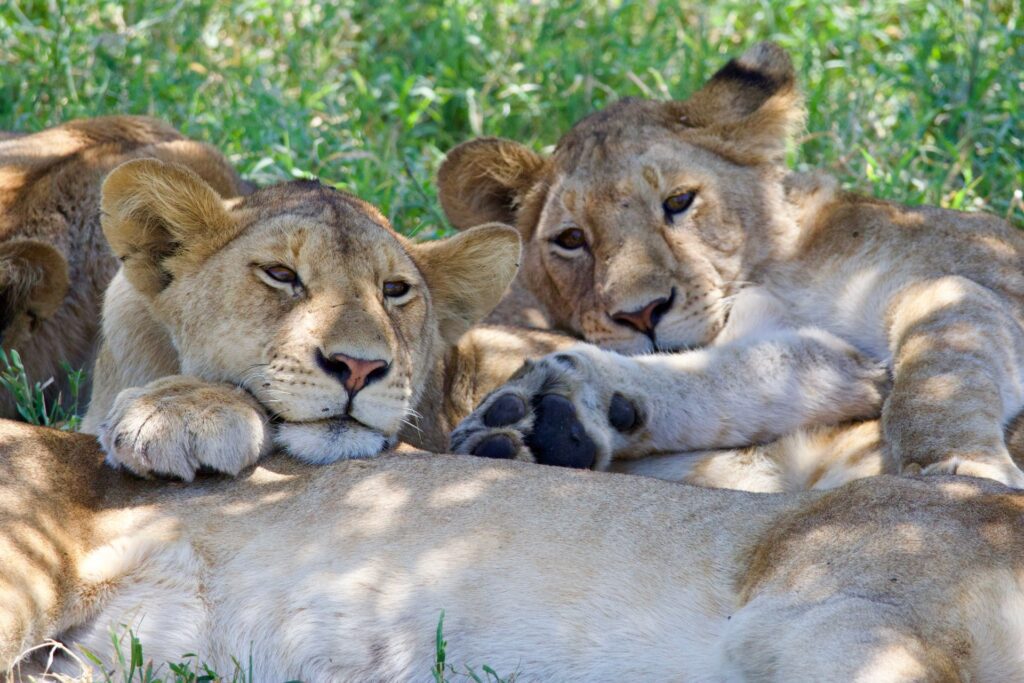
The park supports large lion prides, along with leopards, cheetahs and spotted hyenas. TANAPA identifies dawn and dusk around river lines as productive periods for predator sightings.
Early-morning and late-afternoon game drives can therefore be especially rewarding.
Rather than simply driving from one attraction to another, your guide can spend time reading tracks, watching animal behavior, and searching likely habitats.
3. Look for African Wild Dogs
One of Ruaha’s special attractions is the possibility of seeing African wild dogs.
These highly social predators have large home ranges and can be difficult to find, but Ruaha and the surrounding ecosystem are recognized as important habitat for the species. TANAPA lists African wild dog among the park’s special wildlife sightings.
Seeing a pack moving through the wilderness can be a memorable highlight for wildlife enthusiasts and photographers.
Because wild dogs are constantly moving, sightings are never guaranteed.
4. Discover Greater Kudu, Sable and Roan Antelope
Ruaha is particularly interesting for travelers who want to see species beyond the usual safari animals.
The park sits at an ecological meeting point between eastern and southern African wildlife zones. This helps explain the presence of species such as greater kudu, sable and roan antelope.
The greater kudu is especially associated with Ruaha and is one of the park’s notable species.
Look carefully in woodland and areas around rocky terrain, where these animals can sometimes be more difficult to spot than open-country wildlife.
5. Follow the Great Ruaha River
The Great Ruaha River is one of the defining features of the park.
It provides an important water source for wildlife, particularly as the dry season progresses. Permanent pools and other remaining water sources attract elephants, predators, buffalo and birdlife.
The river also creates different habitats along its course, including areas of vegetation that provide shade, food and cover.
During a game drive, spending time around the river can therefore offer opportunities to observe several species in one area.
6. Photograph Ruaha’s Iconic Baobab Trees
Ruaha’s landscapes are instantly recognizable because of their impressive baobab trees.
These ancient-looking trees rise above the savannah and woodland, creating dramatic silhouettes at sunrise and sunset.
TANAPA highlights Ruaha’s baobab-studded landscapes as one of its defining natural features.
For photographers, the combination of:
- Baobabs
- Elephants
- Golden grass
- Rocky hills
- Open savannah
- Dramatic skies
creates plenty of opportunities for landscape and wildlife photography.
7. Explore Miombo Woodlands
Ruaha isn’t simply open grassland.
The park contains extensive miombo woodland, alongside savannah, rocky kopjes, river systems and other habitats.
This variety is important because different animals prefer different environments.
While elephants and buffalo may be easier to see in open areas and around water, species such as kudu, sable and roan can be associated with woodland habitats.
The changing scenery also makes long game drives more interesting.
8. Experience a Guided Walking Safari
For travelers who want to experience the African bush from a different perspective, guided walking safaris can provide an intimate connection with the landscape.
TANAPA lists walking safaris among Ruaha’s visitor experiences and notes that walking takes visitors closer to nature, where they can observe tracks, birds, plants and smaller wildlife.
Walking safaris must follow park regulations and be conducted by authorized guides or rangers in designated areas.
A walking safari isn’t primarily about seeing large numbers of animals. Instead, it focuses on understanding the smaller details of the ecosystem.
You may learn to recognize:
- Animal tracks
- Droppings
- Bird calls
- Plants
- Insects
- Animal trails
- Signs of recent wildlife activity
9. Go Birdwatching in Ruaha
Ruaha is an excellent destination for bird enthusiasts.
TANAPA currently records more than 570 bird species in the park.
The combination of rivers, woodland, savannah and seasonal habitats creates opportunities for observing many different types of birds.
Possible sightings include:
- Raptors
- Kingfishers
- Bee-eaters
- Rollers
- Hornbills
- Water-associated species
- Migratory birds
If birdwatching is one of your priorities, tell your safari guide before your game drives so the itinerary can take your interests into account.
10. Enjoy a True Wilderness Atmosphere
Perhaps the most important reason to visit Ruaha isn’t one particular animal.
It’s the feeling of being somewhere vast and wild.
The park’s size, landscapes and relatively low visitor density can make the safari feel more exploratory than a highly concentrated wildlife-viewing experience.
TANAPA describes Ruaha as one of Tanzania’s outstanding wilderness areas, with immense landscapes and a remote character.
For travelers who value solitude, scenery and time in nature, that atmosphere can be as important as seeing the Big Five.
Best Time to Visit Ruaha National Park
Ruaha can be visited throughout the year, but the experience changes with the seasons.
June to October: Dry Season
The June–October dry season is particularly popular for wildlife viewing.
As water becomes less widely available, animals concentrate around remaining rivers, pools and springs. This can make wildlife easier to locate. TANAPA’s visitor information identifies June–October as Ruaha’s dry season.
This period can be particularly good for:
- Elephant viewing
- Predator sightings
- Wildlife photography
- Dry landscapes
- Concentrations around water
June can also be interesting for travelers hoping to see greater kudu, with TANAPA noting that males are especially visible during their breeding season.
November to May: Green Season
The wet season brings a dramatic transformation to Ruaha.
The landscape becomes greener, seasonal water sources fill, and birdlife can be particularly rewarding.
TANAPA’s published material identifies November–May as the wet season.
This period can appeal to travelers who enjoy:
- Green landscapes
- Birdwatching
- Fewer visitors
- Dramatic skies
- Photography
- Seasonal wildlife activity
Travel conditions can be more challenging after heavy rainfall, so road and access conditions should be checked when planning a trip.
How Many Days Do You Need in Ruaha?
For a first visit, consider spending at least 3 nights in the park if your schedule allows.
2 Nights
Suitable for travelers with limited time, but the experience can feel short given the park’s enormous size.
3–4 Nights
Provides more time for multiple game drives and potentially a walking experience.
5+ Nights
Allows you to slow down and explore different areas while spending more time observing wildlife behavior.
Because Ruaha is a large wilderness area, adding extra nights can be more valuable than trying to combine too many destinations into a short itinerary.
Ruaha vs. Serengeti: What’s the Difference?
Both are exceptional Tanzania safari destinations, but they provide different experiences.
| Ruaha National Park | Serengeti National Park |
|---|---|
| Vast southern wilderness | Vast northern plains |
| Generally quieter atmosphere | More established safari circuit |
| Baobabs and miombo woodland | Extensive grassland plains |
| Strong elephant experience | Exceptional plains wildlife |
| Greater kudu, sable and roan | Famous Great Migration ecosystem |
| Wild dogs possible | Strong predator viewing |
| Great Ruaha River | Multiple Serengeti rivers and habitats |
| Walking safari opportunities | Primarily game-drive focused in many itineraries |
Choosing between them depends on what you want from your safari.
For travelers with enough time, combining Ruaha with Serengeti can provide two distinctly different perspectives on Tanzania’s wildlife.
How to Get to Ruaha National Park
Ruaha’s remote location is part of its appeal, but it also means planning transportation carefully.
By Air
Scheduled and charter flights serve Ruaha, including the Msembe and Jongomero airstrips.
This is often a convenient option for travelers combining Ruaha with other safari destinations.
By Road
Ruaha can also be reached by road from Iringa. TANAPA estimates the road journey from Iringa at approximately 2–3½ hours, depending on conditions and route.
For a multi-destination safari, your operator can recommend the most practical combination of road transfers and domestic flights.
What to Pack for a Ruaha Safari
Because Ruaha can be hot and remote, practical packing is important.
Bring:
- Lightweight, breathable clothing
- Warm layers for early mornings
- Comfortable closed shoes
- Hat
- Sunglasses
- Sunscreen
- Insect repellent
- Binoculars
- Camera
- Extra batteries or power bank
- Reusable water bottle
- Small daypack
- Light rain jacket during wetter months
For walking safaris, sturdy footwear is particularly important.
TANAPA also recommends binoculars, sunscreen and neutral-colored clothing for visitors.
Responsible Tourism in Ruaha
Ruaha is a sensitive wilderness ecosystem, so responsible travel matters.
Follow your guide’s instructions
Wild animals can behave unpredictably. Always follow instructions about vehicle positioning, walking and wildlife distances.
Stay on designated tracks
Off-road driving is restricted to designated areas and regulations should always be followed.
Do not feed wildlife
Feeding wild animals can alter natural behavior and create safety problems.
Keep the park clean
Carry waste out with you and avoid leaving plastic or other rubbish behind.
Respect local communities
Choose safari operators that support conservation and community initiatives.
TANAPA emphasizes conservation, habitat protection and community partnerships as part of Ruaha’s long-term management.
Sample 4-Day Ruaha Safari Itinerary
Day 1: Arrive in Ruaha
Fly into Ruaha and transfer to your lodge or camp.
Depending on arrival time, enjoy an afternoon game drive.
Overnight: Ruaha National Park.
Day 2: Full-Day Wildlife Safari
Spend the day exploring different habitats.
Search for elephants, lions, buffalo, giraffes, kudu and other wildlife.
Overnight: Ruaha.
Day 3: Walking Safari + Game Drive
Start with a guided walking experience, followed by an afternoon game drive.
Watch for tracks, birds, plants and smaller wildlife during the walk before returning to the vehicle-based safari.
Overnight: Ruaha.
Day 4: Morning Game Drive and Departure
Enjoy an early morning game drive before transferring to the airstrip or continuing your Tanzania journey.
Combining Ruaha With Other Southern Tanzania Destinations
Ruaha can be combined with other destinations depending on the time available.
A longer Southern Tanzania itinerary could include:
Dar es Salaam → Nyerere National Park → Ruaha → Udzungwa Mountains → Dar es Salaam
You can also combine Ruaha with other destinations by air.
For travelers interested in a quieter safari experience, exploring southern Tanzania can provide a different itinerary from the classic Serengeti–Ngorongoro–Tarangire Northern Circuit.
Is Ruaha National Park Worth Visiting?
Ruaha offers a combination of vast wilderness, diverse wildlife, dramatic scenery and a quieter safari atmosphere.
Its elephants, predators, wild dogs, unusual antelope species, baobabs and Great Ruaha River provide plenty of reasons to visit. The park also offers experiences beyond traditional game drives, including guided walking safaris and birdwatching.
For travelers looking to experience a less-developed-feeling side of Tanzania, Ruaha can be an excellent addition to a Southern Tanzania safari.
Plan Your Ruaha National Park Safari With Eve On Safari
A Ruaha National Park safari is an opportunity to slow down and experience Tanzania’s wilderness on a grand scale.
From elephants gathering near the Great Ruaha River to lions resting beneath acacia trees and kudu disappearing into the miombo woodland, Ruaha offers a safari experience shaped by space, wildlife and natural landscapes.
If you’re planning a Tanzania safari and want to go beyond the better-known northern circuit, consider adding Ruaha National Park to your journey.
Explore Ruaha with Eve On Safari and discover the wild landscapes, extraordinary wildlife and peaceful atmosphere of Southern Tanzania.